
The Information Women Deserve Before They Make Decisions About Their Future
Jun 20, 2026
story
Seeking
Action

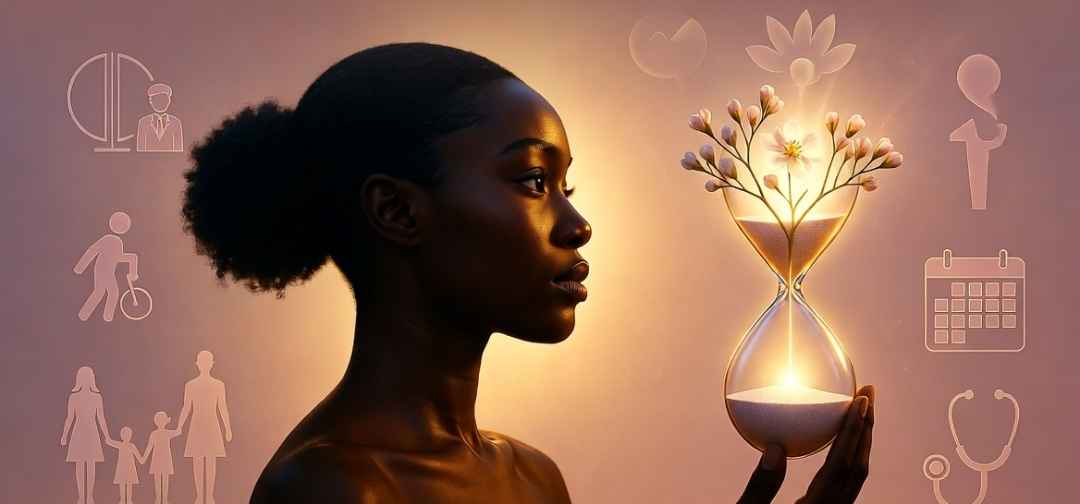
Every woman deserves to be informed.
The day Kemi began worrying about becoming a mother was not the day her fertility changed.
It was the day she realized she had spent years making important life decisions without having access to information she never knew she needed.
Kemi was 25 when she got married.
Like many young women around the world, she had dreams. She wanted to build her career, create financial stability, and grow together with her husband before starting a family.
She loved the idea of motherhood.
She simply believed she had time.
And she was not alone.
Millions of women make decisions about education, careers, relationships, finances, and family planning based on the information available to them. But there is one conversation many women are rarely invited into:
The conversation about their fertility.
At 30, Kemi and her husband felt ready to begin trying for a child. They were hopeful. They imagined the moment they would finally hold their baby.
But months passed.
Then years.
The pregnancy tests remained negative.
The excitement slowly became fear.
Friends offered advice. She was encouraged to try medications and different approaches believed to improve her chances of conception. She followed recommendations from people who wanted to help, but nothing changed.
Eventually, she began seeing a gynaecologist.
She went through fertility investigations, including a hysterosalpingogram (HSG) to examine her fallopian tubes and other assessments to understand what was happening inside her body.
Still, the answers were not simple.
Then came another painful reality.
The treatments that could provide additional options, such as intrauterine insemination (IUI) or in vitro fertilisation (IVF), were financially out of reach.
Kemi and her husband were not unable to provide for themselves. They had built a comfortable enough life to meet their daily needs.
But fertility care was different.
For many families in developing countries, the dream of having a child is affected not only by biology but by access, awareness, and affordability.
Kemi’s story represents countless women across the world who discover fertility challenges only after they begin trying to conceive.
But what if more women had this information earlier?
What if fertility education was not something people searched for only after years of struggle?
A woman is born with the complete supply of eggs she will have in her lifetime. Before birth, a female fetus develops millions of eggs. By the time she is born, that number has already reduced significantly. Throughout childhood, adolescence, and adulthood, the egg supply continues to decline naturally.
Unlike sperm production in men, which continues throughout life, women do not produce a new supply of eggs.
The body works with a limited reserve.
Every month, several eggs begin developing, but usually only one reaches ovulation. The remaining eggs are naturally lost.
But fertility is not only about how many eggs remain.
It is also about egg quality.
As women age, the quality of remaining eggs generally declines, and the chances of conception may become more difficult, especially from the mid-30s onward. This does not mean every woman will experience infertility at a certain age, because every woman’s reproductive journey is different. But understanding these changes gives women the opportunity to make informed decisions.
The problem is that many women never receive this information.
We teach girls about menstruation.
We teach women about pregnancy prevention.
But we rarely teach women how fertility works.
Many women do not know that fertility health can be discussed before there is a problem. Tests such as Anti-Müllerian Hormone (AMH), ultrasound assessment of ovarian follicles, hormone tests, and male fertility assessments can provide information about reproductive health. These tests cannot predict the future perfectly, but they can help individuals and couples have informed conversations with healthcare providers.
For Kemi, the struggle was not only physical.
It was emotional.
There were questions from family members.
“When will you have a baby?”
“Have you gone to see someone?”
“Is everything okay?”
For many women, infertility becomes a silent burden. They attend family gatherings carrying pain they cannot explain. They watch pregnancy announcements with mixed emotions. They face pressure from communities that sometimes place the responsibility of infertility only on women, even though infertility can involve male factors, female factors, both partners, or unknown causes.
Behind every infertility statistic is a person.
A woman with hopes.
A couple with dreams.
A family waiting for answers.
The World Health Organization recognizes infertility as a global health issue affecting millions of people, yet conversations about reproductive health remain limited in many communities.
This silence must end.
Fertility education should become part of women’s health education.
Young women should learn not only how to prevent pregnancy, but also how fertility works.
Healthcare systems should make fertility information and screening more accessible.
Communities should replace blame with support.
Governments and organizations should invest in affordable reproductive healthcare so that the ability to seek help is not determined by income.
A woman’s future should not be shaped by information she never received.
The goal is not to create fear.
The goal is to create choices.
Because knowledge gives women the power to ask questions earlier, seek support sooner, and make decisions about their lives with confidence.
Kemi’s story is not only about infertility.
It is about the millions of women who deserve to understand their bodies before they face a crisis.
The conversation about fertility has been silent for too long.
It is time women everywhere receive the information they deserve.
- Human Rights
- Education
- Health
- Girl Power
- Caring for Ourselves
- Sexual and Reproductive Rights
- Global