
How Much Does EHS Training Consulting Cost for Industrial Facilities in India?
Jun 22, 2026
story
Seeking
Connections


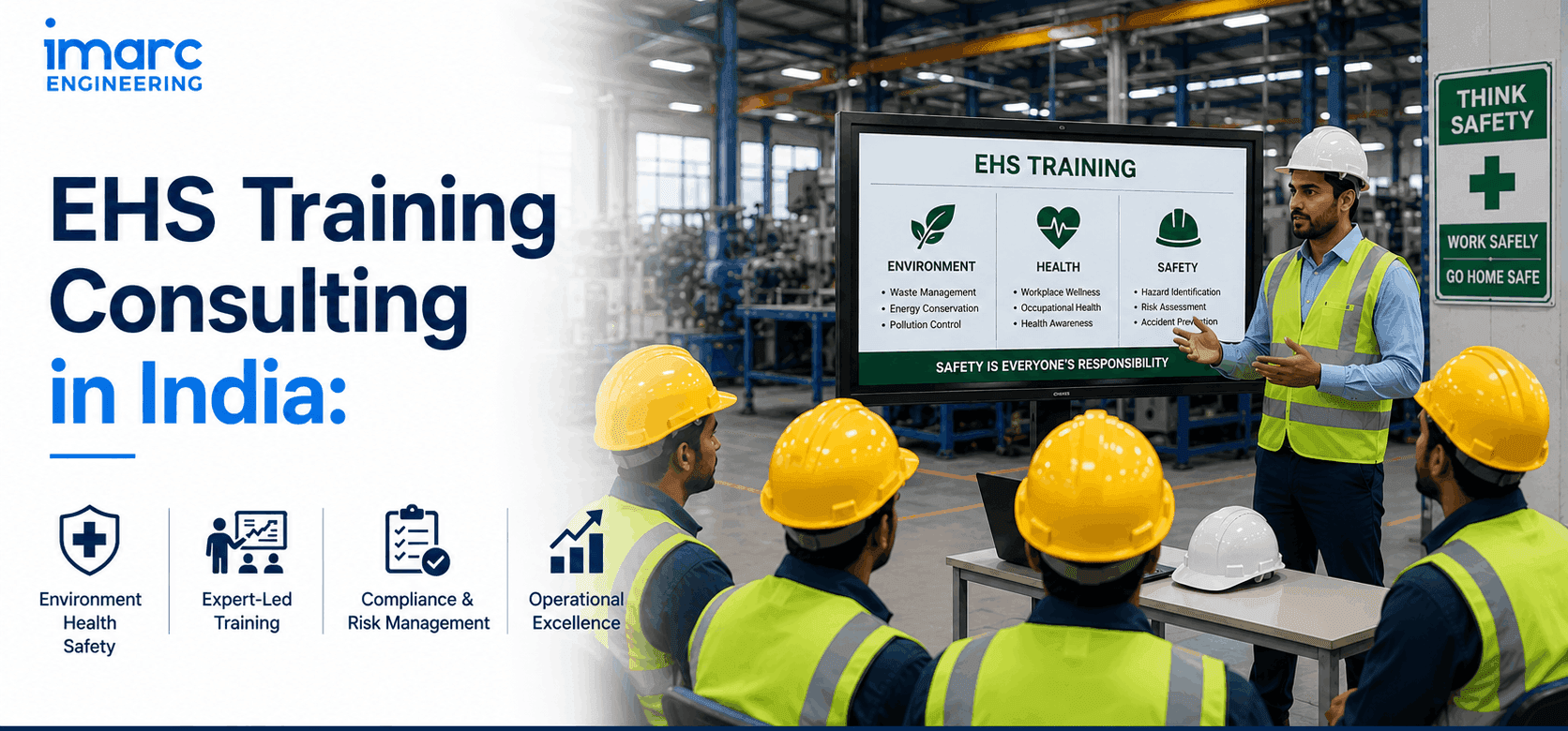
EHS Training Consulting Service in India
Introduction
EHS training consulting cost is one of the first questions Indian manufacturing companies ask when evaluating whether to engage a specialist consultant or continue managing environment, health, and safety training through internal resources. It is also one of the most difficult questions to answer without context, because EHS training consulting fees in India vary significantly based on facility type, workforce size, regulatory complexity, hazard classification, and the scope of training programme design required.
What is less frequently asked, but significantly more important, is what the cost of inadequate EHS training actually is. The Indian Ministry of Labour and Employment recorded over 6,500 reportable industrial accidents in the formal manufacturing sector in a recent annual reporting period, with chemical, pharmaceutical, and heavy manufacturing sectors accounting for a disproportionate share. The National Safety Council of India estimates that the average cost of a reportable industrial accident, including medical expenses, compensation liability, production downtime, investigation costs, and regulatory penalties, exceeds ₹15 lakh per incident for mid-severity cases and ₹75 lakh or more for serious injury or fatality cases.
Against these numbers, the cost of professional EHS training consulting is not an overhead question. It is a risk-adjusted investment decision.
Why EHS Training Consulting Costs Vary So Significantly Across Indian Industrial Facilities
Before examining specific cost ranges, it is important to understand why EHS training consulting cost differ so substantially between engagements. Several variables determine the actual consulting investment required for any specific industrial facility.
Facility hazard classification is the primary cost driver. A Schedule 1 facility under the Manufacture, Storage and Import of Hazardous Chemical Rules 1989 handling threshold quantities of listed hazardous chemicals requires on-site emergency response training, mock drill design and facilitation, hazard communication training covering MSDS interpretation, and process safety management awareness training that a standard light manufacturing facility does not need. The depth and specialisation of training content required for high-hazard facilities significantly increases consulting time and expertise requirements.
Workforce size and composition directly affects programme design complexity and delivery duration. A facility with 200 workers, predominantly permanent and literate in a single regional language, requires a fundamentally different training programme design than a facility with 1,200 workers across multiple shifts, a significant contract labour component, and a multilingual workforce requiring training delivery in Hindi, Tamil, Telugu, and Gujarati simultaneously.
Regulatory framework complexity varies by industry segment. Pharmaceutical facilities seeking CDSCO approval, US FDA compliance, or EU GMP certification require EHS training programmes that satisfy international GMP documentation standards, including training record formats, competency assessment evidence, and retraining frequency protocols that domestic regulatory frameworks do not mandate. Meeting these international standards requires consulting expertise and programme documentation work that adds measurably to engagement cost.
Training programme development versus delivery represents another significant cost variable. A consultant engaged only to deliver a standard training module using existing content completes a fundamentally different and lower-cost scope than a consultant engaged to conduct a training needs analysis, design facility-specific training content, develop assessment tools, build a training calendar, and establish a training management system before any delivery begins.
EHS Training Consulting Cost Ranges for Indian Industrial Facilities
The following cost ranges reflect current market rates for professional EHS training consulting services in India across different engagement types. These are indicative ranges based on the scope typically associated with each engagement type and should be treated as planning estimates rather than fixed benchmarks.
Training Needs Analysis and Programme Design: A structured training needs analysis covering regulatory gap assessment, job hazard analysis review, existing training record audit, and competency mapping for a mid-size manufacturing facility with 200-500 workers typically costs between ₹1.5 lakh and ₹4 lakh depending on facility complexity and hazard classification. This scope produces a documented training needs assessment report and a prioritised training calendar that forms the foundation of a structured EHS training programme.
Standard EHS Training Module Delivery: Individual training modules covering topics such as fire safety awareness, basic first aid, personal protective equipment selection and use, chemical handling and storage, permit to work systems, and manual handling typically cost between ₹25,000 and ₹75,000 per session for a professional consultant delivering to groups of 20-30 participants. Session costs increase for specialised topics requiring certified trainer credentials, such as confined space entry, working at height, or respiratory protection.
Comprehensive Annual EHS Training Programme: An annual EHS training programme covering all mandatory training requirements under the Factories Act 1948, state factory rules, and applicable sector-specific regulations for a facility with 300-600 workers typically costs between ₹8 lakh and ₹20 lakh per year depending on hazard classification, training frequency requirements, and whether the scope includes mock emergency drills, competency assessments, and training record management system implementation.
Process Safety and High-Hazard Training: For chemical plants, petroleum refineries, and facilities handling Schedule 1 hazardous chemicals, process safety management training, HAZOP awareness, emergency response team training, and on-site emergency plan exercise facilitation represent specialist consulting work. Costs for this scope typically range from ₹3 lakh to ₹10 lakh per engagement depending on facility size, hazard complexity, and the number of emergency response personnel requiring trained response capability.
International Standard EHS Training Compliance: For pharmaceutical manufacturers seeking US FDA compliance or EU GMP certification, food processing exporters requiring FSSC 22000 or BRC compliance, and chemical exporters targeting REACH-regulated markets, EHS training programme design and documentation must satisfy international audit requirements. Consulting fees for international standard EHS training programme development typically range from ₹5 lakh to ₹15 lakh for initial programme design and implementation, with ongoing annual maintenance costs of ₹2 lakh to ₹6 lakh depending on regulatory change frequency and retraining requirements.
The Cost of Not Investing in Professional EHS Training Consulting
The regulatory penalty exposure for EHS training non-compliance in Indian manufacturing is substantial and has increased significantly following amendments to environmental and safety legislation in recent years.
Under the Factories Act 1948, penalties for safety violations including inadequate worker training range from ₹1 lakh to ₹5 lakh per violation, with repeat violations carrying enhanced penalties and potential prosecution of company directors and safety officers. Under the Environment Protection Act 1986 and its associated rules, environmental compliance failures attributable to inadequate worker training and awareness can generate penalties of ₹1 lakh per day of continuing violation. For facilities under the Manufacture, Storage and Import of Hazardous Chemical Rules 1989, failure to conduct mandatory on-site emergency planning exercises and worker training carries penalties that can reach ₹10 lakh per inspection cycle.
Beyond regulatory penalties, the operational cost of preventable incidents is significantly larger. National Safety Council of India data shows that Indian manufacturing facilities with structured, formally documented EHS training programmes experience 40-60% lower incident rates compared to facilities without structured training systems. A facility averaging 3 reportable incidents per year at an average cost of ₹15 lakh per incident carries an annual incident cost burden of ₹45 lakh. Reducing this by 50% through structured EHS training consulting represents a ₹22.5 lakh annual saving against a training consulting investment that typically costs a fraction of that amount.
Insurance premium implications are equally significant. Industrial all-risk and employer liability insurance premiums for facilities that can demonstrate structured EHS training programmes, documented competency assessments, and regular mock drill records are typically 10-20% lower than equivalent facilities without this documentation. For a mid-size manufacturing facility paying ₹25 lakh annually in combined industrial insurance premiums, a 15% premium reduction represents ₹3.75 lakh in annual savings directly attributable to structured EHS training investment.
What Determines Value, Not Just Cost, in EHS Training Consulting
The lowest-cost EHS training consultant is rarely the best value choice for Indian industrial facilities with genuine regulatory complexity. Several factors determine the actual value delivered by an EHS training consulting engagement beyond the headline fee.
Sector-specific regulatory knowledge separates consultants who understand the specific EHS training obligations applicable to pharmaceutical, chemical, food processing, or heavy engineering facilities from generalists who apply standard content across all industry types regardless of hazard profile and regulatory framework differences.
Training content localisation for multilingual, mixed-literacy industrial workforces is a specialist capability. Training delivered in a language workers do not understand, or at a literacy level that exceeds the audience's reading capability, produces no measurable improvement in safe behaviour regardless of how well-designed the content is. Effective EHS training consultants develop delivery approaches calibrated to the actual language and literacy profile of the workforce, not the educational level of the facility's management team.
Documentation and record management is increasingly important as Indian regulatory authorities move toward digital compliance systems and require structured training records during factory inspections. A training consulting engagement that produces properly formatted training records, competency assessment evidence, and retraining schedule documentation provides regulatory inspection readiness that informally delivered training cannot.
Mock drill design and facilitation for on-site emergency response capability is a specialist skill that requires knowledge of emergency response protocols, coordination with local fire brigade and emergency services, and scenario design that tests actual response capability rather than producing a scripted performance for inspection purposes.
How IMARC Engineering Supports EHS Training for Industrial Facilities
IMARC Engineering provides EHS training consulting services for manufacturing and industrial facilities across India, covering training needs analysis, regulatory gap assessment, facility-specific training programme design, module development and delivery, competency assessment, mock emergency drill facilitation, and training management system implementation.
Our EHS training programmes are designed specifically for industrial environments across pharmaceuticals, specialty chemicals, food processing, automotive, and heavy manufacturing sectors, addressing the specific regulatory frameworks, hazard profiles, and workforce characteristics applicable to each facility type. Training content is developed in coordination with facility EHS managers to ensure alignment with existing safety management systems and regulatory compliance documentation requirements.
For Indian manufacturing companies evaluating EHS training consulting investment, IMARC Engineering provides an initial regulatory gap assessment that identifies specific training obligations, current compliance gaps, and priority training requirements before any programme design investment is committed.
Consult to the Our Team: https://www.imarcengineering.com/contact?service=ehs-training
Conclusion
EHS training consulting costs for Indian industrial facilities range from ₹25,000 for individual module delivery to ₹20 lakh or more for comprehensive annual programmes covering facilities with complex hazard profiles and international regulatory requirements. The right investment level depends on facility size, hazard classification, workforce complexity, and regulatory framework obligations specific to the industry segment.
What the cost comparison consistently demonstrates is that professional EHS training consulting investment is substantially lower than the incident costs, regulatory penalties, insurance premium exposure, and production downtime that inadequate EHS training generates over time. For Indian manufacturing companies making this investment decision, the question is not whether professional EHS training consulting is affordable. It is whether the alternative is.
- Health
- Environment
- South and Central Asia