
I know they will Kill me, she said: yet we failed her
Aug 1, 2026
story
Seeking
Visibility


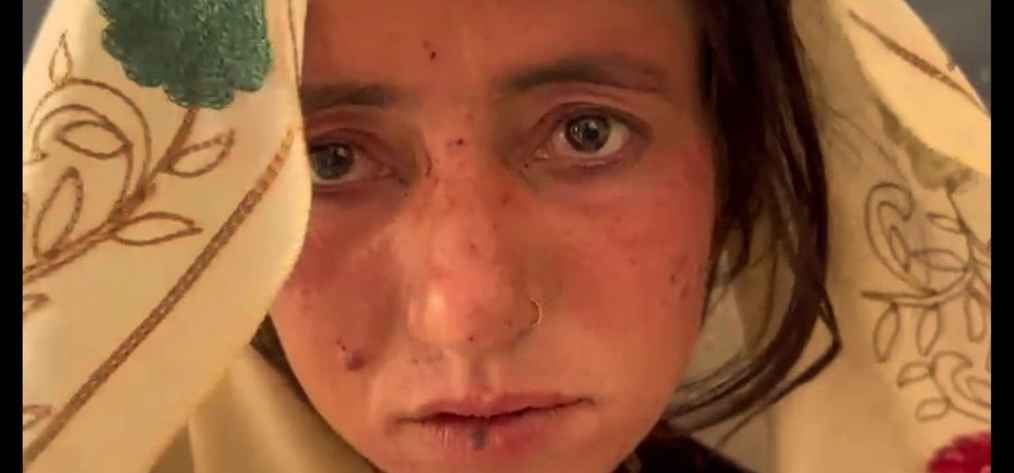
Photo Credit: ARY News
The last portrait of Gulaan Bharo taken in Police station, a young mother who sought protection from abuse, warned, "I know I will be killed." Her plea became a heartbreaking reminder of the urgent need to protect women at risk.
Some stories do not leave your heart. They stay there, asking questions that have no easy answers.
Days before I wrote about Qandeel Baloch, today the story belongs to a women whose innocent eyes do not allow to me see her picture for a while as if She is saying,
" Speak, otherwise the next turn might be yours.
The story belongsto Gulaan Bharo,
The name of victim change.
The faces of criminals change.
But the crime remains the same and the victim is always a woman, as she refused to surrender to the authority of a man.
Gulaan Bharo was not asking for wealth or privilege.
She was asking for something every human being deserves—a life free from violence.
A young mother of two, Gulaan had endured years of physical abuse at the hands of her husband. Fearing she would be forced back into that abusive home, she courageously walked into a police station near Rohri Railway Station in Sindh. She named those responsible for her suffering and pleaded to be transferred to a Darul Aman shelter, believing the law would protect her.
Instead, she was declared "Kari"—a word used to label women as "dishonoured" or "stained." In reality, the stain was never on her character. It was on a society that still treats women as property rather than human beings.
Then came the courtroom.
The place where justice should have stood beside her.
Instead, she stood face to face with her family.
Her father allegedly placed his turban at her feet and begged her to return home, promising she would be safe.
How heavy that moment must have been.
How impossible that choice.
A daughter torn between saving her own life and preserving her father's dignity.
She returned to the judge and agreed to go home.
But before leaving, she said words that now echo in my heart:
"I know I will be killed. I am a mother of two children, but for the sake of my father's dignity, I will sacrifice myself and go back".
Imagine carrying the certainty of your own death while still choosing your family's honour over your own safety.
No woman should ever have to make such a decision.
The tragedy is not only that Gulaan knew.
It is that we knew too.
The police knew she feared for her life.
The court knew she wanted protection.
Her family knew the danger.
Yet somehow, everyone believed promises were enough.
How many women must predict their own murders before we start believing them?
And Gulaan's story is not an isolated one.
Only days earlier, another Sindhi woman, Khalida Chandio (Rubina), who had hoped to rebuild her life after her husband had been missing for over two years, was allegedly killed by her own maternal uncle after attempting to remarry. Her body was reportedly denied even the dignity of a proper funeral. A woman was punished not only in life but even after death.
This is not honour.
This is cruelty disguised as tradition.
Honour never lives in the blood of daughters.
Honour lives in protecting them.
As a woman from South Asia, these stories are deeply personal. They remind me that millions of women still fight for rights that should never require permission—the right to live safely, to leave an abusive marriage, to make their own choices, and to be believed when they say, "My life is in danger."
I refuse to accept that this is our destiny.
Every parent who protects a daughter instead of controlling her changes the future.
Every police officer who believes a frightened woman saves a life.
Every judge who prioritizes safety over social pressure strengthens justice.
Every citizen who refuses to remain silent weakens the culture of violence.
Gulaan Bharo should not be remembered only as another victim of an honour killing.
She should be remembered as a woman who asked for protection, who warned everyone what would happen, and who was failed by the very systems meant to keep her alive.
Her last words were not simply a prediction.
They were an indictment of all of us.
How many more women must tell us they will be killed before we finally listen?
- Gender-based Violence
- South and Central Asia