
Manual Tendering vs E-Tendering: Which One Drives Better Procurement
Aug 3, 2026
story
Seeking
Visibility


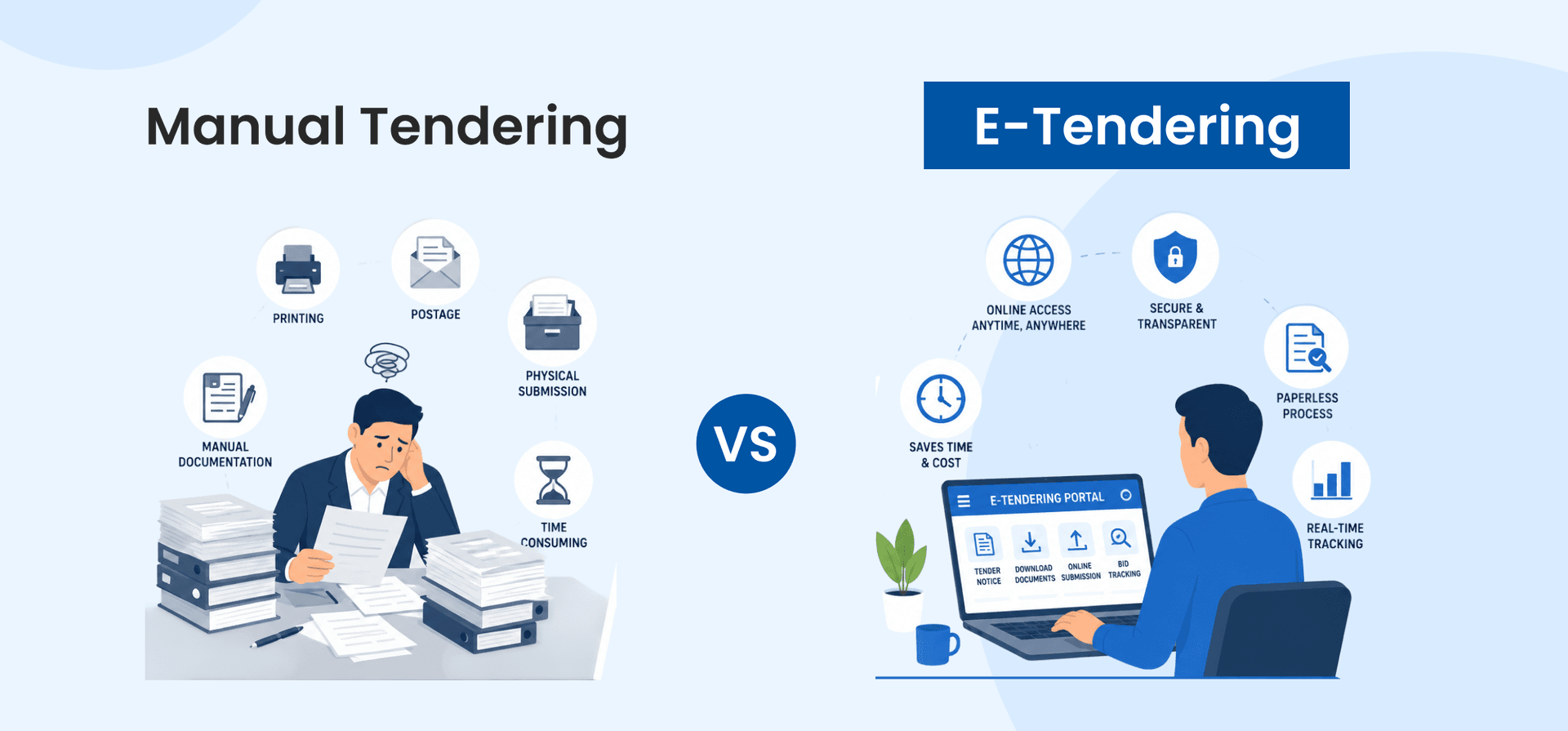
Explore how e-tendering compares with manual tendering, the limitations of traditional procurement, and how BidMate helps organizations streamline tender management, enhance visibility, and improve procurement efficiency.
Manual Tendering vs. E-Tendering
Procurement plays a vital role in helping organizations source the right suppliers, evaluate bids, and award contracts fairly. As businesses grow, traditional tendering methods often become difficult to manage, leading to delays, paperwork, and limited visibility.
E-tendering has transformed procurement by replacing manual processes with a centralized digital platform. Solutions like BidMate simplify tender management, improve supplier collaboration, increase transparency, and accelerate the entire procurement lifecycle.
Understanding the Difference Between Manual and Electronic Tendering
Many organizations still rely on manual procurement methods that involve paperwork, spreadsheets, emails, and offline approvals. While these methods may work for small-scale purchasing, they become inefficient as procurement activities expand.
An e-tendering platform digitizes the complete tender process—from publishing tenders and inviting suppliers to evaluating bids, approving contracts, and maintaining audit records. This helps procurement teams work faster, reduce administrative effort, and improve compliance.
What Is Manual Tendering?
Manual tendering is a traditional procurement approach where tenders are created, distributed, received, and evaluated using physical documents, spreadsheets, emails, or paper-based records.
Every stage requires manual intervention, including issuing tenders, collecting supplier quotations, reviewing documents, and awarding contracts. As procurement volume increases, these processes become slower, more difficult to manage, and more prone to errors.
What Is E-Tendering?
E-tendering is a digital procurement process that enables organizations to manage the complete tender lifecycle from a single online platform.
With BidMate, businesses can:
Publish tenders online
Invite and onboard suppliers
Receive secure electronic bids
Compare quotations
Manage approval workflows
Award contracts digitally
Track procurement activities in real time
By eliminating manual processes, e-tendering improves efficiency while reducing paperwork, operational costs, and procurement risks.
Challenges of Manual Tendering
Lengthy Procurement Cycles
Preparing documents, collecting approvals, printing paperwork, and managing physical bid submissions significantly increase procurement timelines.
Limited Visibility
Tracking tender status, supplier participation, approvals, and procurement progress is difficult when information is spread across emails and spreadsheets.
Higher Risk of Human Error
Manual data entry, duplicate records, missing documents, and calculation mistakes can affect procurement accuracy and decision-making.
Document Management Issues
Managing multiple tender documents, supplier submissions, amendments, and contracts becomes increasingly complex as procurement volumes grow.
Slow Approval Process
Paper-based approvals and lengthy email chains delay procurement decisions and impact project schedules.
Key Benefits of E-Tendering
Faster Procurement Process
Accelerate procurement by automating tender creation, bid submission, evaluation, and approval processes. This helps reduce procurement timelines and enables faster purchasing decisions.
Increased Supplier Participation
Enable suppliers to access tender opportunities online, submit bids with ease, and participate from anywhere. This encourages healthy competition and expands sourcing opportunities.
Reduced Administrative Work
Eliminate paper-based documentation and manual processes through digital workflows, saving time, reducing errors, and improving operational efficiency.
Improved Compliance and Audit Readiness
Maintain standardized procurement procedures with secure document storage, approval histories, and comprehensive audit trails to support regulatory compliance.
Automated Approval Workflows
Speed up procurement decisions with configurable approval workflows, automated notifications, and timely reminders that eliminate approval bottlenecks.
Data-Driven Procurement Insights
Gain valuable insights through real-time dashboards and reports to monitor supplier performance, spending patterns, and overall procurement effectiveness.
Conclusion
Manual tendering may still be suitable for limited procurement activities, but it becomes increasingly inefficient as organizations grow. Paper-based processes often lead to delays, higher operational costs, limited visibility, and inconsistent supplier management.
E-tendering addresses these challenges by digitizing the entire procurement lifecycle. With BidMate, organizations can automate workflows, improve transparency, strengthen compliance, and make faster, more informed procurement decisions. If you’re looking to modernize procurement, reduce costs, and build stronger supplier relationships, BidMate provides a secure and scalable e-tendering solution.
Source: https://bidmate.co/blog/manual-tendering-vs-e-tendering-which-one-drives-better-procurement
- Technology
- South and Central Asia