
Money Throwers vs Money Movers
Sep 9, 2026
story
Seeking
Visibility


Money throwers spend, donate, invest, or fund projects and walk away. Money movers stay present. They follow the impact of their money, question outcomes, and adjust when necessary. The difference between the two is not wealth. It is responsibility.
Money is an absolute necessity in today’s world. From buying drinking water to financing billion-dollar ventures, money makes things happen. Yet the way people relate to money differs greatly. Some treat money like a temporary guest that must be enjoyed before it disappears. Others treat it like a tool that must be directed carefully.
The relationship we have with money shapes how we spend it, how we protect it, and ultimately what impact it creates. If you carry money everywhere like a close companion, you may feel compelled to spend it constantly. If you view money from a place of abundance, you may focus on sustaining the systems that created that abundance. If you manage money carefully, scrutinizing every opportunity and request, then you are more likely to ensure it produces value rather than temporary satisfaction.
But managing money should not only matter to the wealthy. It is a skill everyone should cultivate regardless of financial status. We should all question where our money goes, what it supports, and whether it fulfills its intended purpose.
Too often, people throw money at problems and expect change to happen automatically. But money alone rarely transforms anything. Throwing money at a project without following its progress is not investment; it is distance disguised as contribution.
This is especially visible in philanthropy and development work. Around the world, organizations and donors fund projects they may never personally witness. Reports are submitted. Photos are shared. Videos are circulated. Success stories are packaged neatly for presentations and annual reviews. And while many of these efforts are sincere and valuable, there is still a dangerous tendency to confuse funding with involvement.
I am not advocating for distrust. Distrust focuses on people. I am advocating for what I call mistrust. The mistrust I am describing focuses on distance. It is the discipline of refusing to let your money travel further than your attention. When attention stops, impact becomes an assumption rather than a reality.
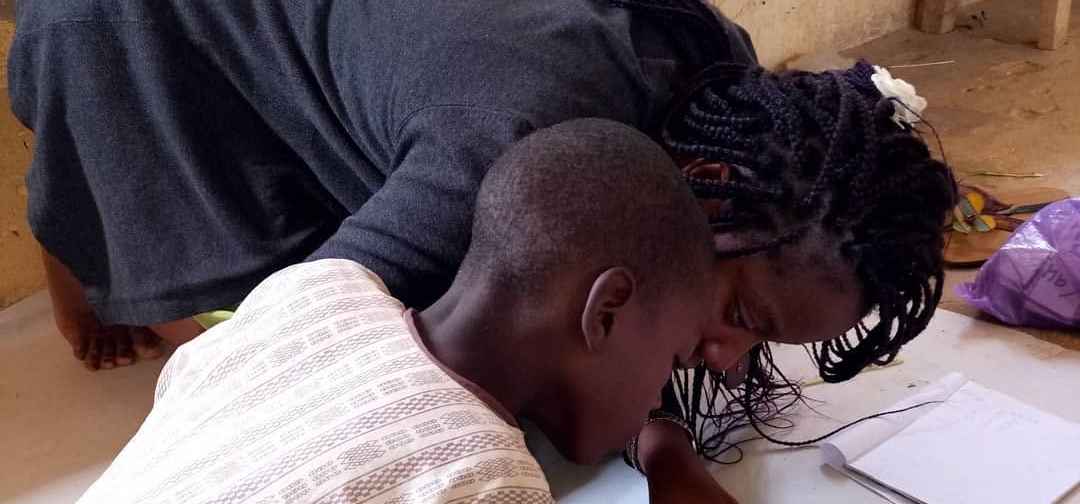
I remember volunteering for an NGO that supported girls’ education through donations from around the world. My responsibility was straightforward: ensure the girls were enrolled in school and their fees were paid. But over time, I began visiting the schools myself. I spoke with teachers. I attended open days. I checked on the students directly. Not because anyone required me to, but because I wanted to ensure our contribution was creating real impact.
By taking this extra step, I discovered that many of the girls were struggling with mathematics and English. In response, I started a teaching programme to help bridge that gap. This not only improved their academic performance but also boosted their confidence. So, for me, what mattered most was not simply that money had been transferred. What mattered was presence. The girls needed to know that support did not end once payment was made. Our involvement communicated something larger: that they were seen, valued, and worth investing in beyond a transaction.
Money only creates lasting impact when people stay connected to it.
For your money to move, you must move with it.
That movement requires attention. It requires observation, adjustment, and humility.
Sometimes the issue is not a lack of funding but a lack of understanding. Often, understanding only emerges when we are willing to get close enough to see what money alone cannot. If people spent more time in the places they claim to support, they might discover that money is often not the core problem at all.
This is particularly important when discussing communities often described as "underdeveloped" or "poor." Such labels can become permanent identities that obscure progress, strengths, and potential. Instead of focusing solely on temporary relief, perhaps more attention should be given to expanding access, strengthening systems, and building on what already works within these communities.
Throwing money at problems may create temporary comfort, but it rarely creates transformation. Real impact requires proximity, accountability, participation and presence. It requires people willing to remain connected to the outcomes of their investments rather than celebrating the act of giving alone.
Because in the end, money is rarely the real issue.
Access is.
- Leadership
- Education
- Our Impact
- Global