
Night-flowering Jasmine By Mosfeka Zannat (Part :1)
Sep 7, 2026
story
Seeking
Action


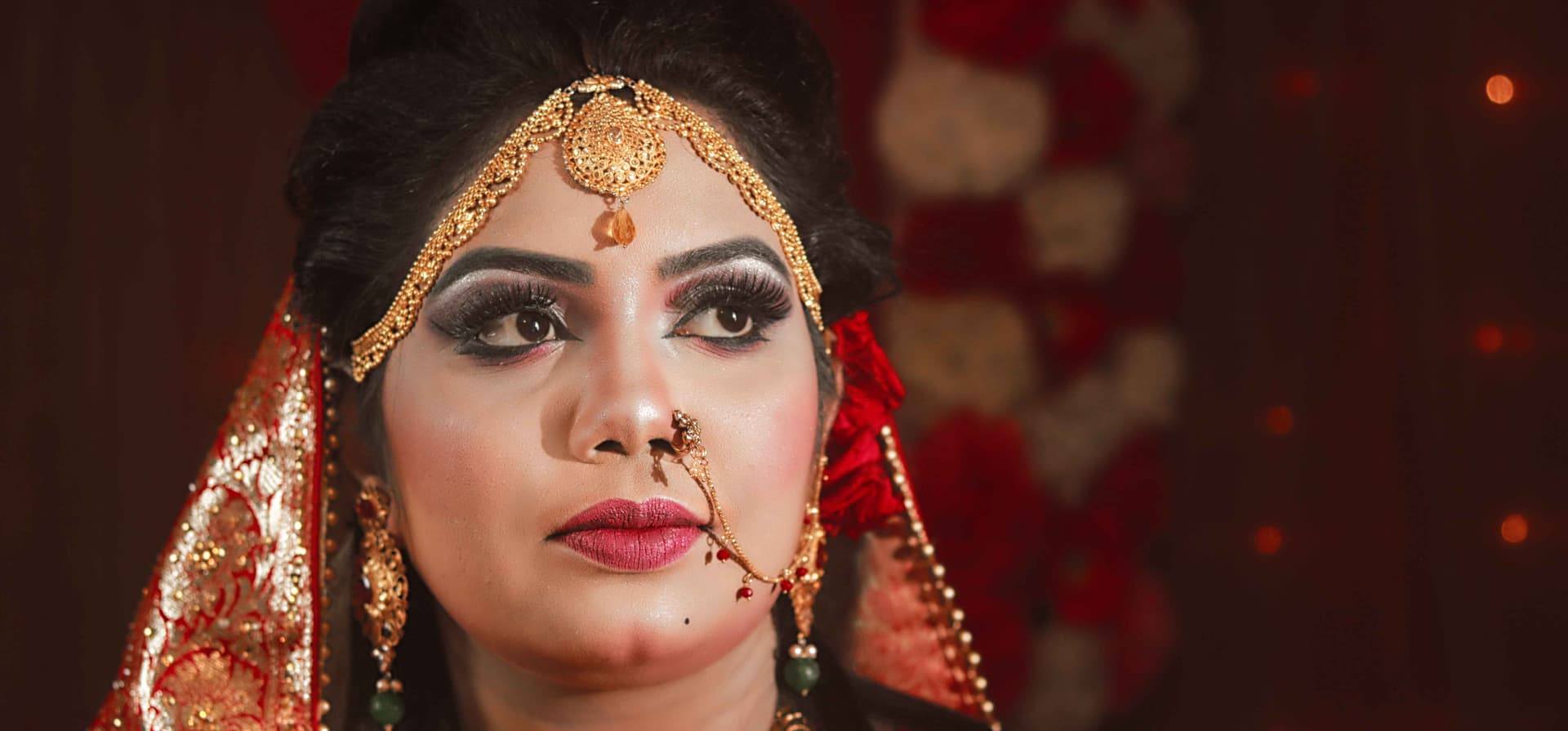
Night-flowering Jasmine By Mosfeka Zannat
Night-flowering Jasmine
By Mosfeka Zannat
I have always adored autumn mornings. On other days, waking up early feels like a chore, an unwelcome tug from the warmth of sleep. But during this season, I cannot bear to lose even a single moment of the morning. I live on the upper floor of a tin-roofed house, in the small room next to the window. It is just my elder sister and me. When I rub the sleep from my eyes and open the window at dawn, the world greets me with the delicate fragrance of Shiuli flowers (Night-flowering Jasmine), the golden sunlight, and the dew glistening on the grass.
Early in the morning, many people gather flowers from the garden—my elder sister, too—but I never feel inclined to do so. I have told her that my share of the flowers will remain on the grass, untouched. No one shall pick them. When we were younger, we often quarreled over these small things. Now, we do not. My sister has grown up; next year she will sit for the SSC exams. Yet Grandfather wants her married immediately.
My sister dreams of working in a large office, driving herself home in her own car. Whenever she sees a vehicle passing by on the road, she says, “Punni, one day that car will be mine. I’ll have my own home too.” I know she can achieve it because she has never been second in any exam. Always first. First in every test, first in the scholarship exams at the police station—countless medals and awards. Yet Grandfather is inflexible. The marriage proposal is final. A young man, a businessman, successful, owns a house and a car. His family background is good. He is tall, slightly balding. His father is a friend of Grandfather, their social equals. You can imagine—the man is older than my sister.
At first, she wept endlessly. Grandfather explained. Grandmother explained. Nothing worked. A week ago, Father came home. He is short-tempered—he strikes before he speaks—but he has never hit my sister. She is, after all, his lucky child. But perhaps her time of suffering has come. She endured his wrath this time; Mother, too…
To tell the truth, about a year ago, Father suffered a business loss and a stroke. Her marriage now seemed urgent for him. Since Mother and Father arranged it, my sister became unusually quiet. She barely spoke, staring off into space as if surrendering everything with resignation. She even allowed me to wear her old clothes, never scolded me when I borrowed my favorite pen. It was strange… so unlike her.
Oh, I nearly forgot—my name is Sementi Srabosti Sompurna, and my sister is Shrabonti Sarathi Srabna. Our names are a mouthful, aren’t they? They are the result of my maternal grandparents’ and paternal grandparents’ seven days of toil. Our friends call me Punni; they call my sister Boni. According to Nani, after my sister was born, Nani and Dada spent seven days confined to the upper floor—no food, no sleep—debating over 150 names. They were both literary men, friends and scholars of repute—one from Dhaka University, Bengali department, the other from Chittagong University. Naturally, naming their first granddaughter could not be ordinary.
Two names were finally selected for my sister by lottery—one for her, the other reserved secretly, perhaps for another granddaughter. My sister arrived in July, and I was born two and a half years later, in December. My nickname is Sompurna; my sister’s is Srabna. Many people mistakenly call her Sraboni, thinking perhaps she was born in the month of Srabon, but her true name is Srabna. Even today, few can pronounce our full names correctly. Yet whenever Nani and Dada call us, they always use the full names: “Sementi Srabosti Sompurna” and “Shrabonti Sarathi Srabna.” Beautiful names, aren’t they? Anyone hearing them might imagine we are extraordinarily beautiful sisters. Truthfully, none of our family is fair-skinned—neither mother nor father. Nani and Grandmother are stunning, yet we are dark-skinned. Still, our worth never diminished. During Eid or Qurbani, the finest clothes in the market were reserved for us. The front seats in school, the most expensive shoes with lace ribbons—everything was for us. Our lives were beautifully arranged—until my sister’s marriage.
Our mornings were filled with picking flowers, going to the madrasa, attending school together, sharing our tiffin with friends. During the monsoon, we would sit on the swinging veranda of our wooden house, watching the rain. My sister and I had a corner of the balcony with our dollhouse. In front was the pigeon coop. On Fridays, we held weddings or birthday parties for the dolls. Mother sometimes cooked pigeon meat. In front of the house bloomed Shiuli, Madhabi, Gandharaj, Hasna-Hena, Gada, and many other flowers. My sister and I each had our own garden—every tree in duplicate, except for the Shiuli, which was singular. It was our favorite.
A month before her wedding, during the rainy season, I woke to find a heavy downpour. My sister opened the window and quickly closed it again. Fear lingered in her eyes. I asked, “What is it?” She said nothing. When she tried opening the window again, she forced it shut and ran away. I was curious and finally peered out. I saw the reason for her fear—a young man standing along the street, rain soaking him, clutching a bunch of unfamiliar white flowers. Later, I learned they were garden lilies. The sight was almost cinematic, like something out of a novel. My sister, timid as ever!
Suddenly, I felt a presence upstairs. I hurriedly closed the window. Mother appeared at the door with warm luchi in her hand. I put one in my mouth and completely forgot about the strange man outside. Over time, I saw him many times—always on the street, always with the lilies. Occasionally, I would find the flowers left near the Shiuli trees. I was furious—why did this happen? My sister seemed indifferent. In recent days, he was nowhere to be found.
I finally asked my sister. She remained silent. The house was abuzz with preparations for her wedding. Father had sold the northern home and some old jewelry to fund it. Guests, numbering two thousand, were to attend. Every detail was new: her jewelry, her home furnishings, her lehangas. I felt a mix of jealousy and joy—the first lehenga was for me to wear; Father brought it from Dhaka. Two lehangas: one yellow, one for the wedding. Her groom had ordered some things from India, much to Dada’s disapproval. Yet my sister now seemed absent, lost in herself. Sometimes she cried quietly. Mother, one day, gently asked if she liked someone. My sister merely said, “No… I’m afraid.” Mother hugged her, explaining the ways of women, the customs of moving into another household. I disliked hearing it. I had said, “Mother, if she doesn’t want to marry, I will. Just promise me the lehenga will be from Benarasi silk.” Everyone laughed, including my sister. Her smile was grown-up now, mature, briefly appearing and fading.
To be continue......
- Human Rights
- Gender-based Violence
- Becoming Me
- Survivor Stories
- Global