
One Pad, One Opportunity: Menstrual Dignity, Education & Climate Action in Rural Kenya
Jul 31, 2026
first-story
Seeking
Collaboration
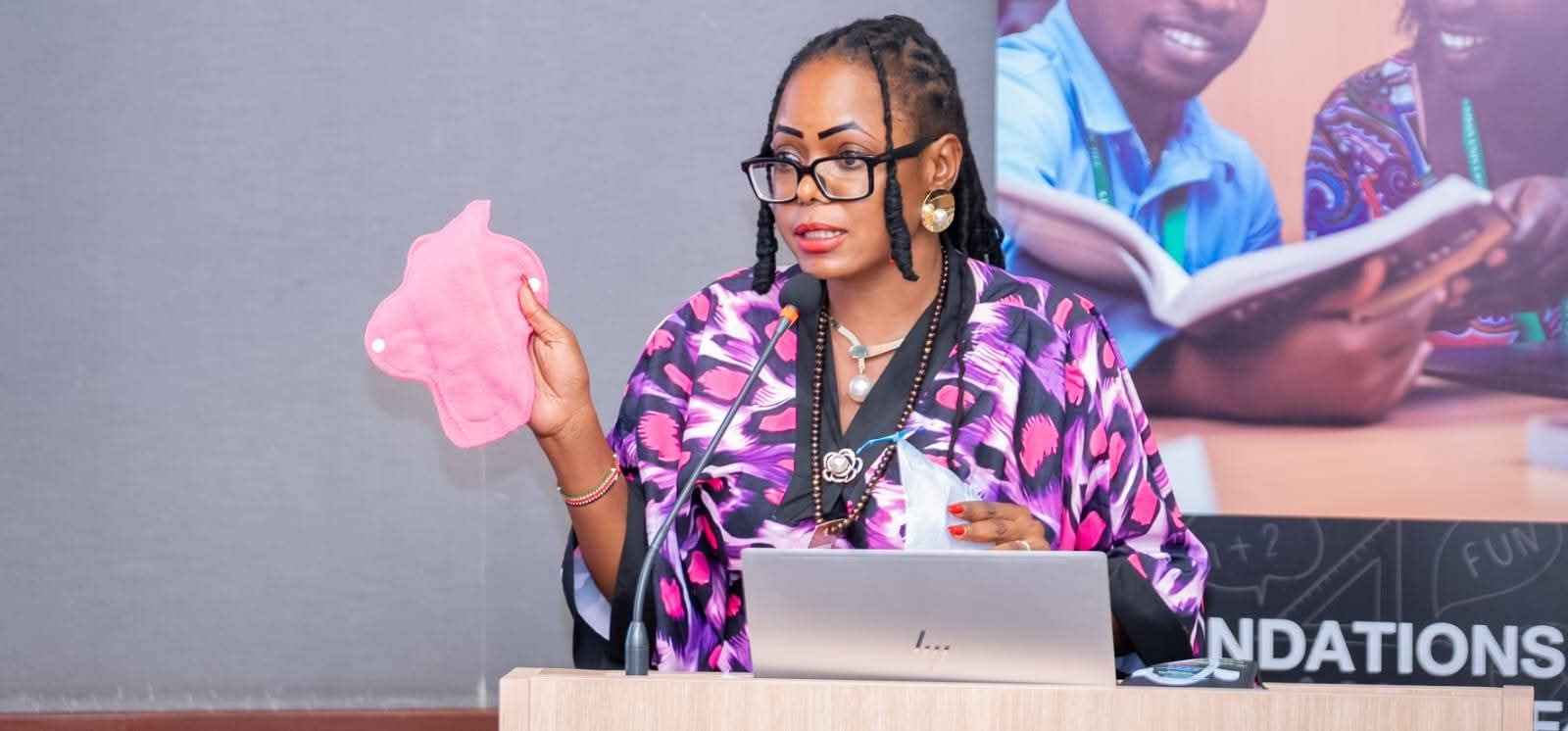
Photo Credit: Photo courtesy of Aga Khan University photographer
Presenting “Bridging Policy and Practice: Strengthening Inclusive Education for Children with Disabilities in Rural Kenya” at the Foundation for Learning (F4L) Conference at Aga Khan University. The presentation showcased SCDI’s grassroots innovations advancing inclusive education, disability inclusion, menstrual dignity through Nyadhi Pads, and community-led solutions in rural Kenya.
For many girls, menstruation should be a normal part of growing up. However, for millions of girls and women around the world, menstruation becomes a barrier to education, confidence, health, and opportunity.
Globally, an estimated 500 million girls and women lack access to adequate menstrual products and menstrual hygiene facilities. Across many communities, period poverty forces girls to miss school, withdraw from activities, experience stigma, and face challenges that affect their dignity and wellbeing.
In Rarieda, Siaya County, Kenya, I witnessed how lack of access to menstrual products affected girls’ education and confidence. A girl should never have to miss school because she cannot access safe and dignified menstrual products.
This reality inspired the creation of One Plastic One Pad (Nyadhi Pads) through the Solidarity with Children with Disabilities Initiative (SCDI) — a social innovation that transforms plastic-based textile waste into reusable menstrual products while advancing menstrual dignity, girls’ education, disability inclusion, adolescent mental wellbeing, and climate action.
The name Nyadhi, meaning dignity and pride in Dholuo, represents our belief that every girl deserves to feel confident, valued, and included.
Our approach is based on a simple theory of change: when communities transform environmental challenges into sustainable solutions, provide girls with dignified menstrual products, and address stigma through education and psychosocial support, girls are better able to participate in school and community life.
Through One Plastic One Pad, we have:
Repurposed 3 tonnes of plastic-based textile waste into reusable menstrual products, demonstrating that waste can become a resource for social and environmental impact.
Produced Nyadhi Dignity Kits, with each kit containing:
- Four reusable sanitary towels,
- One small waterproof pouch for temporarily storing used reusable pads,
- One larger storage pouch for safely keeping the reusable pads and waterproof pouch.
Reached 600 girls with reusable Nyadhi Pads, supporting girls to manage menstruation with dignity and reducing barriers caused by period poverty.
Reached five schools, providing menstrual health education, awareness, and support to adolescent girls.
Achieved Kenya Bureau of Standards (KEBS) certification for Nyadhi Pads, demonstrating our commitment to quality, safety, and locally produced sustainable menstrual solutions.
Integrated adolescent mental health and psychosocial support into our programmes, recognising that menstrual stigma, shame, and exclusion affect emotional wellbeing.
Engaged 100 boys through Coaching Boys into Men (CBIM) to promote respectful relationships, positive masculinity, gender equality, and boys as allies in ending menstrual stigma.
Promoted environmental sustainability by connecting menstrual health solutions with climate action and responsible waste management.
Our work demonstrates that menstrual health is not only about providing a product. It is connected to education, mental wellbeing, gender equality, poverty reduction, disability inclusion, and environmental responsibility.
Through Nyadhi Pads, we have created a community-based solution where waste is transformed into dignity. A reusable pad is not only a menstrual product — it represents confidence, school participation, and an opportunity for girls to continue pursuing their dreams.
We believe lasting change requires the involvement of the whole community. Girls need access to safe menstrual products, but they also need supportive families, informed teachers, and boys who understand that menstruation should never be a source of shame or discrimination.
Beyond our programmes, we contribute to wider conversations on mental health, wellbeing, and social change through advocacy, writing, and knowledge sharing. Our perspectives on mental health and community wellbeing have been published through Standard Media’s EveWoman platform, including articles such as “Mental Health Policy to Key Productivity,” “Prioritise Employee Mental Health,” “Mental Health Treatment: Options,” and “Trauma-Informed Care.”
We have also shared our work through professional and international platforms, including the European Society for Prevention Research (EUSPR) 2025 Conference in Berlin, where our adolescent mental health work was presented, highlighting the importance of community-based approaches to adolescent wellbeing.
Our work has grown from a community-based response in Siaya County into a wider social innovation model contributing to conversations on menstrual health, mental wellbeing, disability inclusion, and sustainability. Nyadhi Pads demonstrates how grassroots solutions from rural Kenya can contribute to global change.
As a member of the Good Market community, we are part of a global network of social enterprises and impact-driven organisations working towards positive social and environmental change. This membership supports our commitment to building a sustainable social enterprise model that combines menstrual dignity, climate action, disability inclusion, and community empowerment.
In 2025, our efforts received recognition when I received the Changemaker Award at the Women Achievers Africa Conference in Lagos, Nigeria, recognising our commitment to advancing dignity, inclusion, and sustainable solutions for girls and women.
Our journey has shown us that solutions created with communities can transform challenges into opportunities.
A reusable pad can mean a girl stays in school.
A supportive conversation can restore confidence.
A community that understands menstruation can replace shame with dignity.
At One Plastic One Pad, we are building a future where no girl misses school because of menstruation, where plastic-based textile waste becomes a resource, and where every young person — including girls with disabilities — can live with dignity.
- Positive Masculinity
- Disability Justice
- Environment
- Education
- First Story
- Climate Change
- Salud menstrual
- Global