
Phanindranath Kakarla: CEO ARCIL and the Evolution of India’s Stressed Asset Market
Sep 10, 2026
first-story
Seeking
Visibility


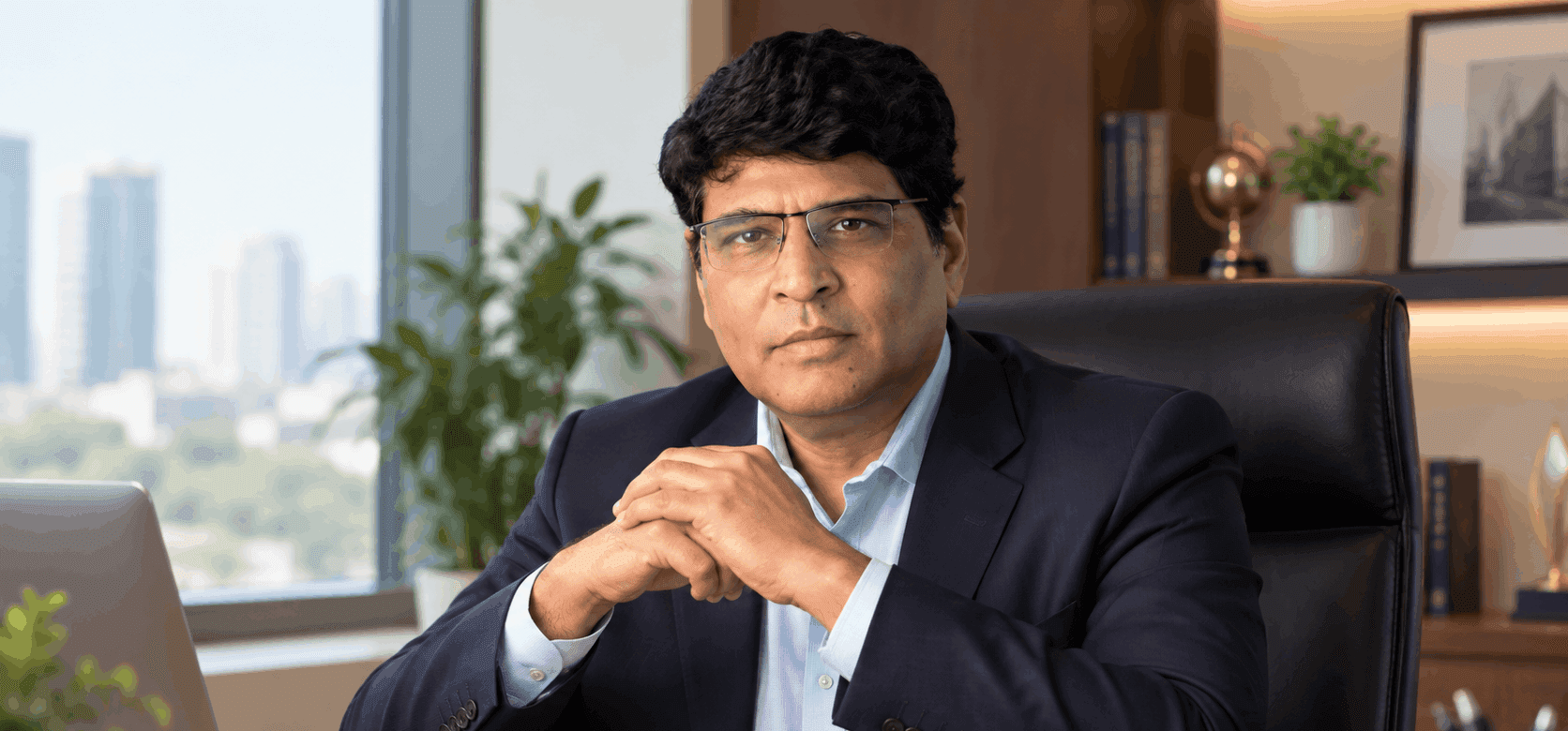
Photo Credit: Phanindranath Kakarla
Phanindranath Kakarla - CEO Arcil
India’s credit ecosystem is evolving in how financial stress is identified, managed and resolved. While non-performing assets (NPAs) remain an important part of the banking and financial-services landscape, increasing attention is being directed towards early-stage credit stress, retail and SME portfolios, and more specialised approaches to recovery and resolution.
Against this backdrop, Phanindranath Kakarla, CEO ARCIL, has taken charge of Asset Reconstruction Company (India) Limited at an important stage in the development of the stressed-asset market.
ARCIL announced Phanindranath Kakarla’s appointment as Chief Executive Officer and Managing Director effective March 8, 2026. He had joined the company as President in April 2025. According to ARCIL, his responsibilities include leading the acquisition and resolution of stressed assets.
Phanindranath Kakarla: CEO ARCIL and the Changing Credit Landscape
Asset reconstruction companies occupy a specialised role in India’s financial system. They acquire stressed financial assets from banks and financial institutions and pursue strategies aimed at resolution and recovery.
The market, however, is gradually moving beyond a conventional focus on assets that have already become NPAs.
Recent reporting indicates that ARCIL is examining early-stage stressed accounts and exploring collections-as-a-service for banks and non-banking financial companies (NBFCs).
This reflects a wider industry question: whether financial stress can be addressed more effectively before an account reaches a more advanced stage of deterioration.
Earlier intervention can potentially provide lenders with more options, but it also requires better monitoring, appropriate collection capabilities and a clear understanding of the underlying reasons for financial stress.
India’s Stressed Asset Market Is Moving Beyond Traditional NPAs
The distinction between an NPA and an account showing early signs of stress is increasingly relevant to the industry.
Special Mention Accounts (SMAs), for example, can indicate repayment stress before an account reaches the regulatory threshold for NPA classification. Recent reporting on ARCIL’s activities has highlighted the potential importance of such early-stage accounts to the collections and resolution market.
This creates a different operating environment from traditional corporate NPA resolution.
Large corporate exposures may involve restructuring negotiations and complex resolution processes, while retail portfolios can consist of thousands or millions of individual accounts. SME exposures present another set of challenges, often linked to cash flow, working capital and operating conditions.
Consequently, resolution strategies increasingly need to reflect the characteristics of individual asset classes.
Phanindranath Kakarla on Early-Stage Credit Stress
The Expected Credit Loss (ECL) framework is another development that could influence the stressed-asset ecosystem.
In comments reported by Financial Express, Phanindranath Kakarla said ECL could lead banks to recognise credit stress earlier. He also noted that ARCIL had acquired certain non-NPA stressed accounts and expected this segment to become more relevant with the implementation of the framework.
The potential impact goes beyond accounting.
Earlier recognition of deterioration could influence when lenders seek specialised resolution support and how they manage accounts before they become more severely impaired. For asset reconstruction companies, this could broaden the range of assets requiring collection, restructuring or resolution expertise.
Why Retail and SME Stress Matters
The composition of India’s stressed-asset market is also changing.
Recent reporting has highlighted the growing importance of retail assets within ARCIL’s portfolio. Financial Express reported that the company’s retail portfolio had grown by approximately 56% over the preceding two years.
Retail and SME resolution differs considerably from managing a small number of large corporate exposures.
Retail portfolios can involve a substantial number of individual borrowers, making data management, portfolio segmentation and efficient collections important. SME borrowers, meanwhile, may face financial stress because of working-capital constraints, changing demand or broader business conditions.
For the industry, this means that resolution cannot necessarily follow a single model. Understanding the nature of the stress and the borrower’s circumstances is central to determining an appropriate approach.
The Growing Role of Collections and Technology
The potential expansion into early-stage stressed accounts is also increasing the importance of collections infrastructure.
ARCIL has discussed the possibility of providing collection services to banks and NBFCs for early-stage stressed accounts.
Technology can support this evolution by helping institutions analyse portfolios, identify repayment patterns, segment accounts and prioritise collection activity.
However, technology is only one part of effective resolution. Financial stress can arise from very different circumstances, and collection practices need to remain consistent with regulatory requirements and responsible financial-services standards.
Phanindranath Kakarla: CEO ARCIL and the Road Ahead
Kakarla’s appointment comes as India’s asset reconstruction industry examines a broader range of approaches to stressed credit.
Early-stage stress, retail and SME assets, collections services and the potential implications of ECL are all contributing to a changing industry landscape.
The larger issue extends beyond any individual company or executive. As India’s organised credit market expands, the ability to identify financial stress early and resolve it efficiently will remain important for banks, NBFCs, businesses and borrowers.
For Phanindranath Kakarla, CEO ARCIL, this changing environment provides the context for his leadership of a company operating within a specialised segment of India’s financial system.
The evolution of the stressed-asset market will ultimately depend on how effectively financial institutions combine regulatory frameworks, financial expertise, data capabilities and responsible resolution practices. As the industry moves towards earlier recognition and more differentiated approaches to stressed credit, those capabilities are likely to become increasingly important.
- Leadership
- Economic Power
- First Story
- South and Central Asia