
Seven Years Later: From Serving PLO Lumumba’s Foundation to Honouring Its Founder
Aug 31, 2026
story
Seeking
Encouragement


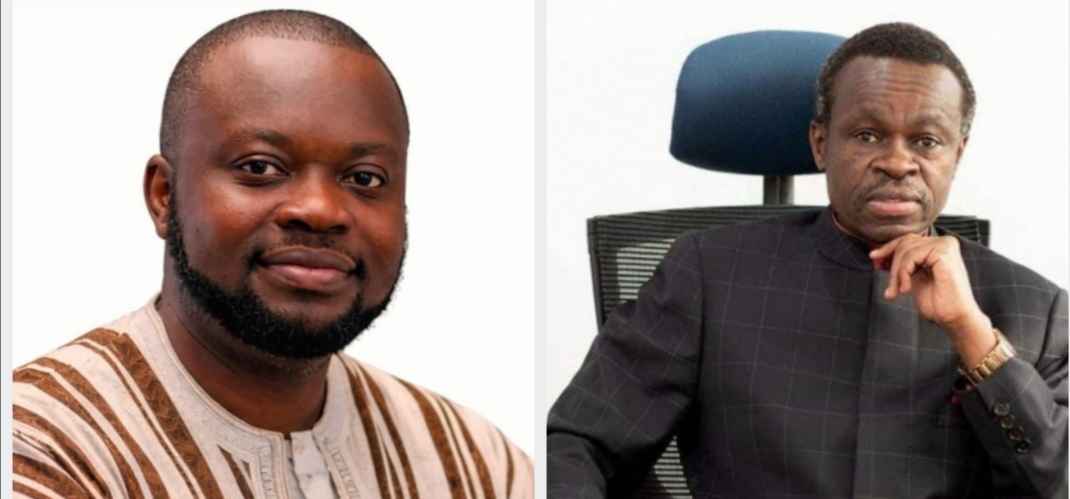
How an unexpected professional opportunity in 2019 became a formative chapter in my journey through communication, human rights advocacy, and institutional leadership.
There are some moments in life that only make complete sense when you look back.
For me, one of those moments came in 2026, when I found myself helping to honour Professor Patrick Loch Otieno (PLO) Lumumba, one of Africa’s most renowned legal scholars, public intellectuals, and Pan-Africanists.
At first glance, it was simply an award.
But for me, it was much more.
It was a moment that took me back to 2019 — to a professional opportunity that I could not have known would become such an important part of my journey.
Seven years earlier, I had been appointed Deputy Head of Media and Communication of the Ghana Chapter of the PLO Lumumba Foundation.
I later became Head of Media and Communication.
In 2019, I was serving within an institution inspired by Professor Lumumba’s Pan-African vision.
In 2026, I was part of the leadership of another institution that had decided to recognise him.
When I paused to reflect on that transition, I realised just how much had changed.
And yet, in another sense, how much had remained the same!
The opportunity that started it all
My appointment to the PLO Lumumba Foundation Ghana Chapter came at a time when I was deeply involved in media and communications.
I saw the opportunity primarily as a chance to contribute my skills.
But it became much more than that.
It became a learning experience.
Working with the Foundation exposed me to a Pan-African environment where conversations about African leadership, governance, responsibility, self-determination, and the future of the continent were not abstract ideas.
They were part of the work.
They were part of the conversations.
And, through Professor Lumumba’s speeches and engagements, they became ideas I had to think about for myself.
I had the privilege of interacting with Professor Lumumba through meetings, organizational engagements, and his public speeches.
I was not simply observing a renowned African intellectual from a distance.
I was experiencing, within an institutional setting, how ideas about Africa could be communicated, debated, and translated into advocacy.
That experience stayed with me.
What I learnt from Professor Lumumba
I have often reflected on what exactly I took away from that period.
The answer is not one particular speech or one particular meeting.
It is a collection of values and ideas.
Professor Lumumba’s emphasis on African responsibility, leadership, governance, and self-determination challenged me to think more deeply about what it means to contribute to Africa’s development.
I began to appreciate even more strongly that leadership is not simply about occupying a position.
It is about responsibility.
It is about service.
It is about the courage to speak when silence is easier.
And it is about understanding that the future of Africa cannot be built by governments and political leaders alone.
Civil society, young people, journalists, academics, advocates, and ordinary citizens all have a role to play.
Looking back today, I can see that some of the principles that guide my work were strengthened during that period.
Human dignity.
Responsible leadership.
Pan-African solidarity.
Youth empowerment.
And the use of communication to influence social change.
Those lessons traveled with me even after my chapter with the Foundation came to an end.
The journey took a different direction
Over the years, my professional journey expanded beyond journalism and communications.
I became increasingly involved in human rights advocacy, civil society mobilisation, youth development, and institutional leadership.
Eventually, I became Executive Director of Human Rights Reporters Ghana (HRRG).
At HRRG, the work has taken me into different areas of human rights advocacy and social development.
The more I worked in this space, the more I appreciated the importance of recognising people who were making meaningful contributions to society.
That thinking eventually contributed to the creation of the HRRG Global RightsShield Awards.
The idea was simple but important: to create a platform that recognises individuals and institutions whose work contributes to human rights, democracy, justice, civic freedoms, sustainable development, and human dignity.
I did not know at the beginning that one of the people we would eventually recognise would be someone whose institution had played a role in my own professional development.
And then came 2026
The inaugural HRRG Global RightsShield Awards were held in Abuja, Nigeria, under the theme:
“Championing Human Rights and Democratic Renewal.”
The inaugural class included an impressive range of African and international personalities and institutions.
Among them were President John Dramani Mahama of Ghana, President Bola Ahmed Tinubu of Nigeria, Hon. Samuel Okudzeto Ablakwa, Ms. Victoria Ibezim-Ohaeri of Spaces for Change West Africa, Ing. Dr. George Asiedu, Hon. Alfredos Nii Anyetei, Joshua Elikplim Adjei, Eminence Lead International LBG, and international digital rights organisation Access Now and its RightsCon Global Team.
Each represented a different form of leadership and social contribution.
Some were recognised for political and democratic leadership.
Others for diplomacy, human rights, local governance, digital rights, sanitation, civil society, or community development.
And among them was Professor PLO Lumumba.
He was selected for the HRRG Global RightsShield Award for Pan-African Legal Thought and Moral Leadership.
When the decision was made, I could not help but think back to 2019.
From serving to honouring
There is something deeply humbling about finding yourself on the other side of an experience.
In 2019, I was the one being given an opportunity to serve under a platform associated with Professor Lumumba.
In 2026, I found myself leading an organisation that was recognising him.
I described it as a “very humbling full-circle moment.”
And I meant it.
“In 2019, I was the one being given an opportunity to serve under the platform Professor Lumumba had built. Today, in 2026, I find myself in the position of leading an organisation that is recognising him.”
Those words were not intended to suggest that my journey was somehow extraordinary.
Rather, they reflected my appreciation for how professional journeys develop.
Sometimes an opportunity that appears ordinary at the time becomes significant years later.
Sometimes a person you meet briefly leaves an intellectual impression that remains with you.
Sometimes an institution you serve within becomes part of the foundation upon which you build something of your own.
Why honouring him mattered to me
Professor Lumumba was recognised for his contribution to legal scholarship, ethical leadership, constitutionalism, good governance, and African unity.
But for me, the recognition carried another layer of meaning.
It was an opportunity to acknowledge influence.
I have always believed that African intellectuals and public thinkers deserve to be recognised not only for the positions they have held but also for the ideas they have planted in others.
I see the award as one African institution recognising another African institution of thought.
“A man whose ideas, speeches, scholarship, and example have influenced many of us who continue to work for a better Africa.”
That is how I see Professor Lumumba.
Not simply as a distinguished Kenyan scholar.
Not simply as a Pan-Africanist.
But as one of the African voices that have challenged many of us to think more seriously about our responsibilities to the continent.
The people who influence us may never know
One of the humbling things about influence is that the person doing the influencing may never fully know the extent of their impact.
Professor Lumumba may never know precisely what I learned from his speeches.
He may never know which particular words stayed with me.
He may never know how certain ideas influenced the way I approached communication, advocacy, or leadership.
But I know what I learned.
“Professor Lumumba may not know the full extent to which his words and example have influenced people like me. But I know what I learned."
That is why I believe mentorship and intellectual influence should not always be understood in formal terms.
You do not always need someone to sit down with you every week and call themselves your mentor.
Sometimes you learn by listening.
Sometimes you learn by watching.
Sometimes you learn by serving within an institution built around someone's vision.
And sometimes, years later, you realise that those lessons have become part of who you are.
What the journey has taught me
My journey from the PLO Lumumba Foundation Ghana Chapter to HRRG has taught me something important about professional development.
We often focus on the destination.
The title.
The position.
The institution.
The award.
But sometimes the most important part of the journey is what happens in between.
The people we meet.
The opportunities we receive.
The values we absorb.
The mistakes we make.
The institutions we serve.
And the lessons we carry forward.
My 2019 appointment did not automatically determine where I would be in 2026.
But it became one of the experiences that contributed to the person and professional I became.
A broader lesson for Africa’s young professionals
There is another lesson here that I believe is worth sharing, particularly with young Africans.
Do not underestimate the opportunities you receive simply because they do not come with impressive titles.
An opportunity to serve can become an opportunity to learn.
An opportunity to learn can become an opportunity to lead.
And an opportunity to lead can eventually become an opportunity to create opportunities for others.
When I joined the PLO Lumumba Foundation Ghana Chapter in 2019, I was focused on doing the work assigned to me.
I could not have predicted that seven years later, I would be reflecting on that experience while helping lead an organization honoring Professor Lumumba.
That is the unpredictability of a professional journey.
The circle has come full
Today, when I look back at those seven years, I do not see a straight line.
I see chapters.
2019 was one chapter.
The years of journalism and communications were another thing.
My increasing involvement in human rights advocacy and civil society work became another.
HRRG became another.
And the Global RightsShield Awards became another.
Yet these chapters are connected by something deeper: a continuing commitment to human dignity, responsible leadership, advocacy, and social change.
That is why the recognition of Professor Lumumba felt so personal.
It was not simply about honouring a distinguished African scholar.
It was also about recognising an influence that had become part of my own journey.
Looking ahead
I do not consider this a conclusion.
If anything, the experience has reminded me of the responsibility that comes with leadership.
Those who influence us should inspire us to influence others positively.
Those who create opportunities for us should inspire us to create opportunities for others.
And those whose ideas challenge us should inspire us to continue asking difficult questions about the kind of Africa we want to build.
My journey with the PLO Lumumba Foundation began with an opportunity to serve.
Seven years later, that journey returned in an unexpected way—with the opportunity to honour its founder.
That is my full-circle moment.
But more importantly, it is a reminder that the ideas we encounter today can become part of the institutions we build tomorrow.
- Human Rights
- Leadership
- Education
- Our Impact
- Global