
Stitching what the earth shook loose: Bordando lo que hay en el corazón
Sep 10, 2026
story
Seeking
Visibility

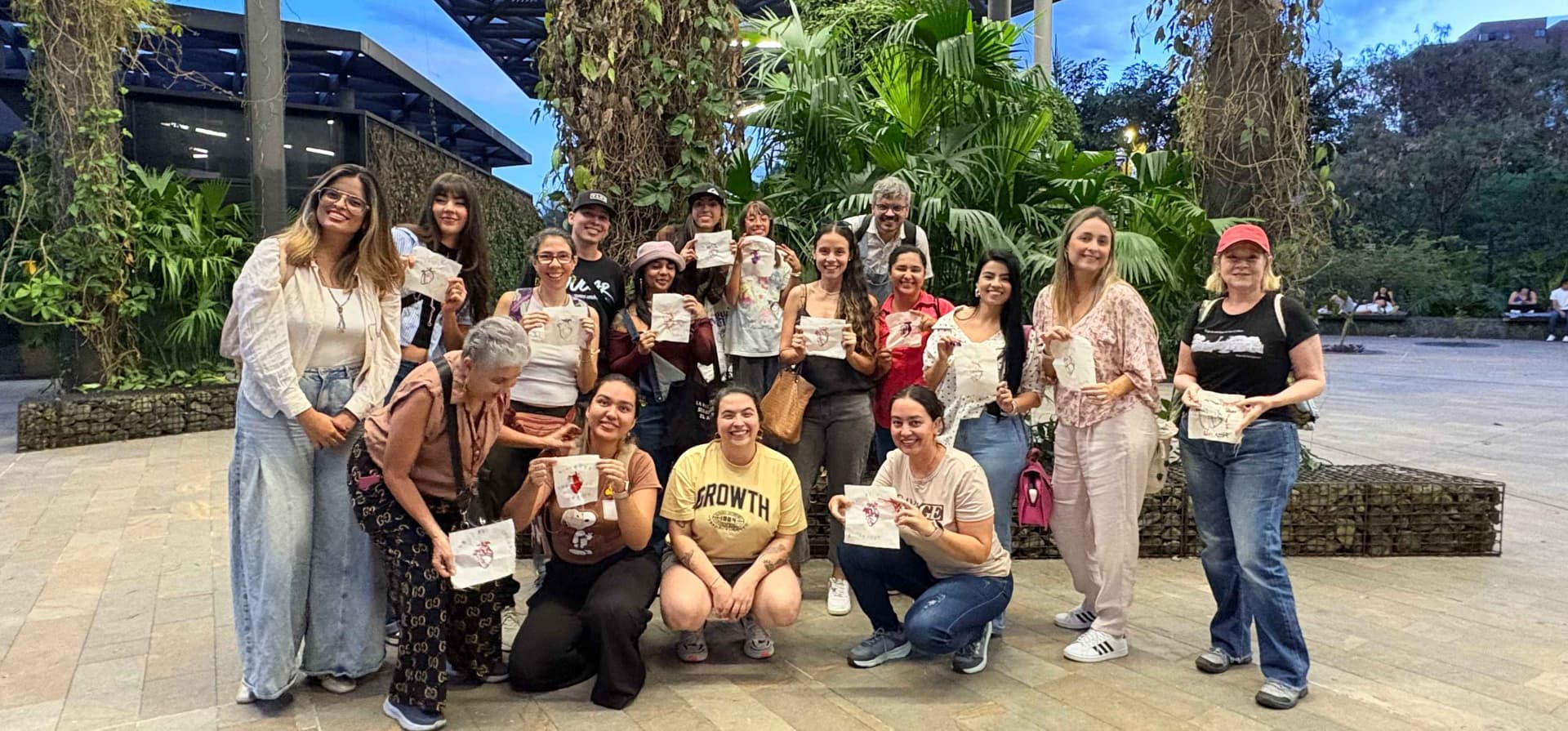
Participants picture
Today marks exactly one month since the earthquake. On August 10, 2026, at 7:24 in the morning, several cities in Colombia lived through a shaking the ground had not delivered in more than 27 years — a 7.4 that reached, in the end, 472 municipalities across the country. I live in Medellín. We felt it here too, and for a few seconds our bodies and our sense of safety were at risk. But that risk was nothing next to what unfolded elsewhere: towns with catastrophic loss, people injured, people missing, homes and businesses that can no longer be inhabited.
In Medellín, the demand to return to normal arrived almost immediately. And I — still shaking, still trying to reach friends in the cities hit hardest — could not find an answer to what "normal" was supposed to mean in the face of something that was not normal at all. I spent the days after moving between two sentences I kept repeating to myself: "I am safe, and, from that place of luck, what can I do for the people who are not?"
I am proud, in this, of something in Colombian culture: material aid for the most affected communities was mobilized fast and widely. But inside my own attempt to return to "normal," I kept running into people — on the street, in the elevator, on public transport — talking about what had happened without finding anyone actually to receive it. Something had moved in all of us that nobody could quite put into words. And that, I think, is where a disaster stops being only a geological event and becomes a social one: not the collapse of buildings, but the collapse of the scripts we normally use to hold each other.
That is where Refugio Creativo comes in — the project I run with my brother, self-financed, built on the conviction that psychology and art belong together. We decided to open a free public gathering in Medellín for anyone who wanted to do something with all of this pain, and to do it in community: to try to listen to each other, and to give each other strength. That is how Bordando lo que hay en el corazón — Embroidering what you carry in your heart — came to be. We opened twenty spots. They filled in under two hours, and on Sunday, August 23, fifteen people showed up.
This city has dynamics that feel foreign to the culture of community we come from — gentrification has been quietly erasing them for years. For one afternoon, we got to inhabit public space again. To let whatever was still trembling underneath find a way out through the stitch, the word, the simple fact of sitting across from another person.
A month out, what stays with me most is not the tremor itself but what it revealed: that even inside a system that demands individualization, people are always looking for a way to connect with each other — and the aggression of consumption and cost of living here has only made those unconnected spaces more entrenched.
The earthquake didn't only move our houses. It moved the idea of dying alone. Of watching the people we love die. Of losing what we have built with effort and what represents us. It even reached older wounds — abandonment, abuse, the isolation of feeling that our bodies can no longer inhabit the territory of this city the way they once did.
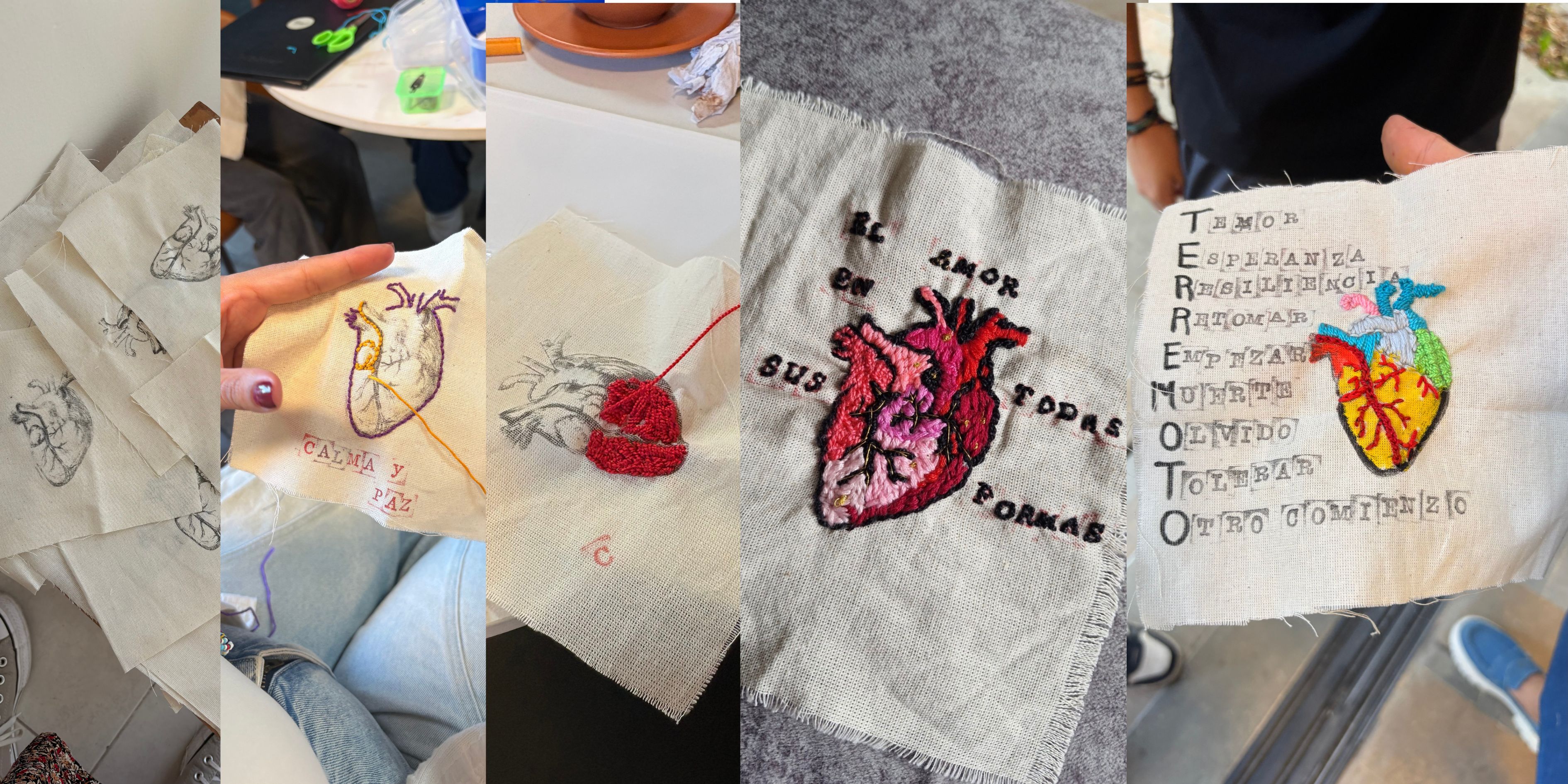
All those fears — the ones that sometimes cannot be named in words — found their shape in the embroidery. And the result was spectacular. One afternoon, 2 hours´ worth of registration, fifteen bodies in a circle — it is a small gesture against a very large current. We can't yet offer this kind of open gathering as often as I would like our project to. But it confirmed something about what collective care could look like at scale, if there were ever the infrastructure to let it be more than occasional.
— Milena
- Human Rights
- Moments of Hope
- Caring for Ourselves
- Stronger Together
- Our Impact
- Global