
Teachers’ Responsibility Is Building Up H.U.M.A.N.S
Sep 5, 2026
story
Seeking
Connections
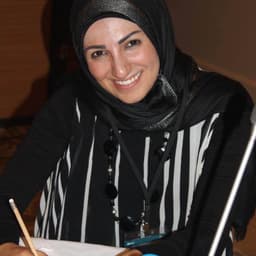

In the Age of AI, Let Us Teach Our Children to Remain H.U.M.A.N.S.
By Hawraa Ghandour
Today, I had the privilege of participating in an inspiring Teachers’ Day Round Table, where educators and thought leaders came together to reflect not simply on teaching, but on the responsibility we carry toward the generations that will inherit our world.
During the discussion, I was asked a question that stayed with me long after the round table ended:
“Beyond academics, what is the greatest responsibility of a teacher in preparing the next generation for a rapidly changing world?”
It sounds like a question about education.
But to me, it is actually a question about humanity.
And this was my answer.
We Are Preparing Children for a World We Have Never Seen
For years, education has focused heavily on one question:
What should our children know?
Today, I believe we need to ask something deeper:
Who do our children need to become?
We are preparing them for a future none of us can fully predict.
Artificial intelligence is transforming how we learn, work, communicate, and create. Knowledge is changing rapidly. Professions are evolving. Some jobs will disappear, others will emerge, and our children will face situations for which there may be no textbook answer.
So perhaps our responsibility is no longer simply to give them answers.
It is to prepare them to face the unknown without losing themselves.
Coming from Lebanon, adaptability is not simply a skill I read about in educational literature. It is something we have lived.
Our children and educators have repeatedly had to continue through uncertainty, interrupted education, crises, and sudden change.
And this has taught me an important distinction:
Resilience is not only about surviving a challenge. It is about learning how to transform a challenge into an opportunity.
When a door closes, look for a window.
And when there is no window, teach our children to have enough courage, imagination, and adaptability to build one.
But there is something even more important.
As the world becomes increasingly artificial, perhaps education has a new responsibility:
to protect what is beautifully human within us.
That thought led me to one word:
H.U.M.A.N.S.
H — Hear Deeply
We live in a world where everyone wants to be heard, yet fewer people seem willing to truly hear.
Teach children not merely to listen so they can reply, but to listen so they can understand.
Hear the words.
Hear the emotions.
Hear different perspectives.
And sometimes, hear what another person cannot put into words.
I often wonder how many conflicts—in our classrooms, families, communities, and even our world—could be transformed if we raised a generation that knew how to hear before judging.
U — Uplift Yourself and Others
I want our children to be ambitious.
I want them to grow, dream, achieve, and continuously up-level themselves.
But I don’t want them to believe that success means reaching the top alone.
Rise, but become a reason someone else rises too.
Your light does not become weaker because you helped another person discover theirs.
To me, this is one of the most beautiful forms of leadership.
M — Make a Difference
We constantly ask children:
“What do you want to become when you grow up?”
Maybe we should start asking:
“What difference do you want to make?”
You don’t need to change the entire world to make a difference.
Sometimes one teacher changes one student.
One sentence restores confidence.
One opportunity changes a direction.
One person saying, “I believe in you,” changes the story someone has been telling themselves for years.
We may not all change the world.
But every one of us can change someone’s world.
A — Act
I don’t want education to create people with beautiful thoughts that remain trapped inside their minds.
If you believe in kindness, practice it.
If you believe in peace, build it.
If you believe in justice, stand for it.
If you believe something should change, become part of changing it.
Our values become meaningful when they become visible.
Let your actions become the evidence of your thoughts.
N — Network
Networking, for me, is not about collecting names, contacts, followers, or business cards.
It is about building human bridges.
Connect people.
Connect cultures.
Connect ideas.
Connect someone who has an opportunity with someone who needs one.
Connect someone who has a dream with someone who can help that dream breathe.
Sometimes one meaningful connection can open a door that changes a person’s entire journey.
Networking should not only expand our circles. It should expand possibilities.
S — Speak Kindly
Perhaps this is closest to my heart.
Words create environments.
Some words make people shrink.
Others allow them to expand.
A sentence may take five seconds to say and remain inside another human being for twenty years.
I believe in you.
You can do it.
Your voice matters.
I see something in you.
We may never fully know what those words awaken inside someone.
So perhaps before we speak, we should ask:
What happens to people after they hear my words?
Do they leave feeling smaller or stronger?
Do they doubt themselves—or discover themselves?
Do my words silence their spirit—or unleash it?
Speaking kindly is not weakness.
Kindness can be a powerful form of leadership.
A kind word can motivate.
A kind word can heal.
A kind word can restore hope.
And sometimes, the right words can awaken a human spirit that had almost forgotten how to believe in itself.
Perhaps We Should Stop Asking Children to Compete With Machines
AI will become smarter.
Technology will become faster.
Machines will continue doing extraordinary things.
But I don’t want our children to compete with machines at becoming machines.
I want them to become more beautifully human.
I want them to adapt when the world changes.
I want them to turn challenges into opportunities.
And I want them to remain H.U.M.A.N.S.
H — Hear deeply.
U — Uplift yourself and others.
M — Make a difference.
A — Act on what you believe.
N — Network and build human bridges.
S — Speak kindly.
Because perhaps education’s greatest responsibility is not simply to prepare children for the future.
It is to prepare the kind of human beings we want creating that future.
And now, I would like to pass the same question I received today to you.
Whether you are a teacher, parent, student, leader, policymaker—or simply someone who cares about the world our children will inherit—I would love to hear your answer:
Beyond academics, what do YOU believe is the greatest responsibility of a teacher in preparing the next generation for a rapidly changing world?
Add your voice. Share your answer.
Perhaps if enough of us answer this question, we will discover that the conversation about the future of education is not really only about education.
It is a conversation about the future of humanity.
- Leadership
- Girl Power
- Education
- Collaboration Stories
- Global