
The Power of Resilience: Shaping My Destiny
Sep 10, 2026
first-story
Seeking
Encouragement
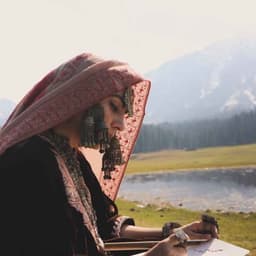

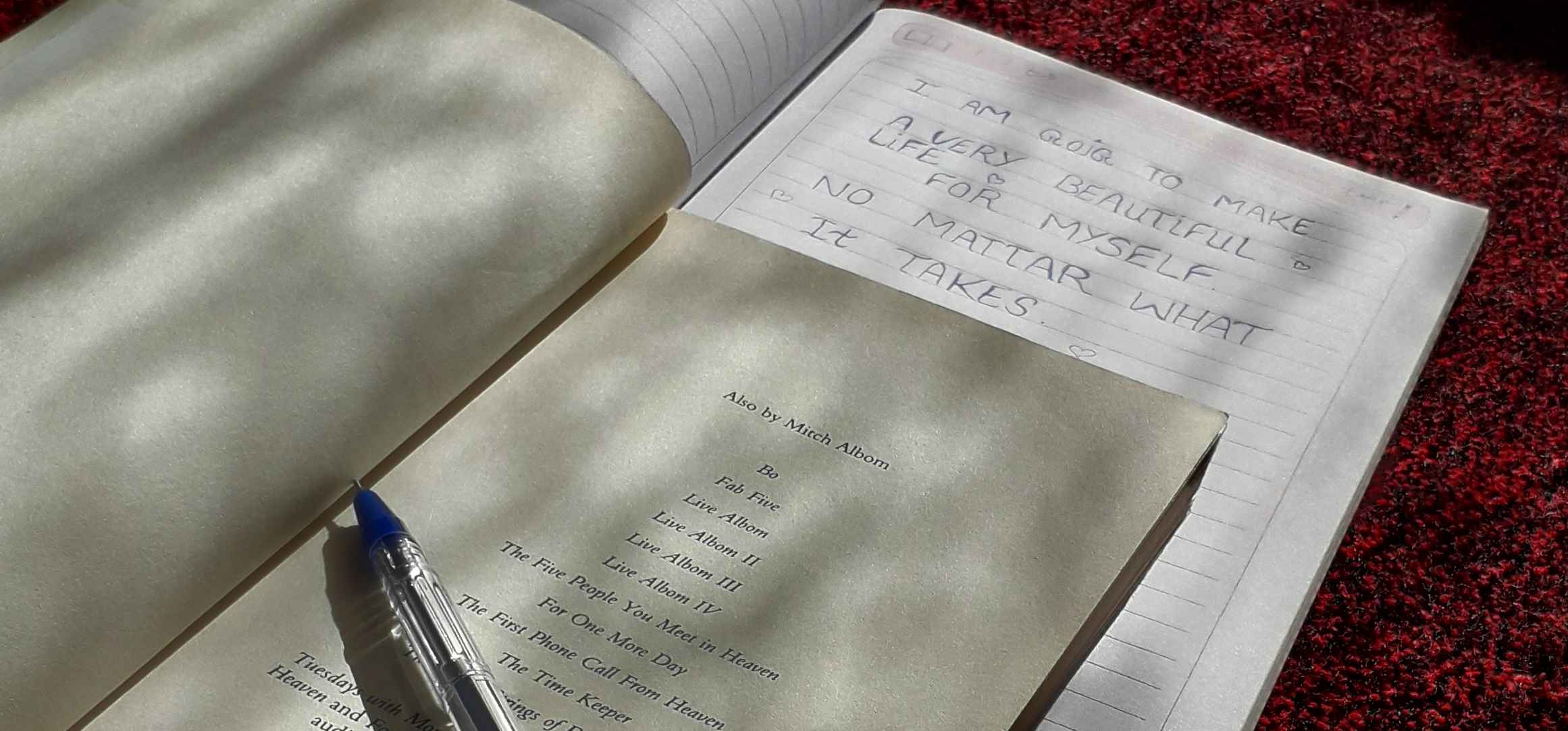
It all began when I was just ten years old. Through a neighbor's window, my eyes caught the glowing screen of their television, which was playing a movie about outer space. Watching the endless stars, the crimson sphere of Mars, and astronauts drifting in weightlessness felt like pure magic. In that exact moment, a profound dream was born in my young heart: I fell deeply in love with the cosmos
However, the world around me was far too small for my immense dreams. I lived in a remote village, a place isolated from the world, where even phone signals rarely reached. Whenever I dared to speak of my dream, people ridiculed me. They would sneer, saying, 'Even going to school is too much for you, so how do you expect to touch the stars?' Their words built a cold wall before me, yet my eyes remained fixed on the sky.
In the darkness of the night, I would stare through the window at the star-filled sky, a place that, unlike our village, knew no boundaries. Counting the stars, I whispered to myself, 'One day, this dream will become real.' In my imagination, I saw myself holding my parents' hands, taking them far away into the deep cosmos—to a place so distant that no one could ever humiliate them for not having a son, or look down on them for only having a daughter like me.
Living in that tiny village left no room for hope or a brighter future. Yet, when my parents looked at me and saw the burning passion I held for the cosmos, they made a monumental decision. Defying our circumstances, they chose to send me to Kabul—a chaotic, crowded, and unfamiliar city. For me, Kabul was more than just a destination; it was a ticket toward the very stars I had spent my youth gazing at from my village window.
Saying goodbye to my father, my mother, and my sister was the most heartbreaking yet courageous moment of my life. Their eyes held a fragile mixture of tears and hidden hope. As my sister watched me and my parents let me go, it felt as though they were sending all of their own suppressed dreams to Kabul through me. A heavy lump tightened in my throat, but as the car moved forward and our tiny village—with all its whispers and prejudice—faded into the dust behind us, I made a silent vow: I would never give up. I had to fight, for them and for the stars. would never give up. I had to fight, for them and for the stars.
When I finally arrived in Kabul, the grueling journey and the endless rattling of the old car had left me utterly exhausted. The deafening noise and overwhelming chaos of the crowded city offered no comfort; I felt entirely out of place. We moved into my grandfather's house—a small home built to shelter perhaps eight people, yet there were twenty of us crammed beneath its roof. In that chaotic, stifling space, merely finding a quiet corner to dream of Mars became a whole new impossibility
Amidst the overwhelming chaos of the house, the kitchen became my sanctuary. At night, when everyone else had fallen asleep, I studied in the dim light of that small room. In my imagination, the kitchen transformed into a spacecraft, and I would speak to the pots and pans as if they were my fellow astronauts. Against all odds, I struggled to scrape together enough money for internet data, spending those quiet hours downloading videos of Mars and the endless cosmos. My grandfather’s tiny kitchen had secretly become my launchpad to the universe."
In my village, the fate of girls my age was pre-written and sealed early. While they were being married off, managing households, and cradling newborns, my gaze was fixed on something far greater. My heart was consumed by a longing to study, to break free, and to journey into the infinite expanse of outer space. In our community, not having a son was carried as a heavy, unspoken shame, a societal flaw for which my parents were constantly humiliated. To shield them from this cruel disdain, I forced myself to step into the shoes of the son they never had. I tried to become their strength. With my tiny, fragile hands, I would water the fields and care for the trees. Those small hands lacked the strength to lift the massive, heavy buckets of water, and every muscle in my young body screamed under the weight. Yet, I forced my aching bones to endure, dragging those heavy buckets across the dirt, determined to prove that our home was not empty, and that a daughter could carry the weight of a family's survival.
The vehicle that carried me away was an ancient, decaying car, battered by time and endless rough roads. Inside, the air was suffocatingly thick, and with every turn, waves of fine, choking dust swept through the broken windows, coating everything in a layer of gray grime. The car was packed to its absolute limit; I was squeezed tightly into the backseat alongside a woman, a man, and their two-year-old child, all of whom were our relatives. For eight agonizing hours, the journey dragged on through rugged terrain. The child, overwhelmed by the heat and the constant rattling of the old engine, cried almost non-stop, adding to the immense exhaustion that weighed heavily on my body. Every bump on the unpaved road felt like a physical blow, and the sheer discomfort was nearly unbearable. Yet, whenever the misery of the road threatened to break my spirit, I would press my forehead against the dusty glass and look upward. Out there, past the grit and the noise, was the serene, unchanging sky. Gazing at that vast blue expanse made me forget the grueling hours, reminding me that the road, no matter how harsh, was leading me toward my stars
In Kabul, my only lifeline was a basic English class, the language I knew I needed if I ever wanted to understand the secrets of the cosmos. But outside that classroom, the weight of my reality in the city was crushing. Living in my grandfather’s house, I was constantly suffocated by a deep sense of shame and guilt. Every single day, the landlord would knock aggressively on the front door, shouting that there were too many of us, demanding that we either lessen our numbers or pack up and leave immediately. The pressure from inside the house was no less painful. The women of the family, exhausted by the cramped quarters, would often sigh bitterly, murmuring, "We barely have enough room for ourselves; I wish no anyone else had come. Where are we supposed to go now with all these people?" Their words felt like sharp needles in my heart. I knew I was an extra burden, a guest taking up precious space. In the absolute pitch-black of the night, when the heavy breathing of twenty sleeping bodies filled the room, I would bury my face in my pillow and cry silently. I wept for the humiliation my presence caused, yet in those tears, my resolve only hardened. I was paying a heavy price just to learn the language of the stars, and I couldn't let it be for nothing
Today, my battle continues in a different corner of Kabul. I had to leave my grandfather’s house and move into my aunt’s place, but the tears have not stopped. Here, every evening is heavy with endless worries over rent and electricity bills. Yet, back in the village, my parents still endure the harshest labor just to send me the fees for my English class. Their long-distance whispers of hope are my fuel: "One day, you will reach your dream," they tell me. I refuse to let their sacrifices be in vain. Surrounded by financial stress and the familiar pain of being a guest, I study with a fierce, quiet desperation. I will keep pushing, and I will keep looking up at the crimson shine of Mars. I will prove to my village, to the landlord, and to the entire world that the walls built around a girl cannot chain her spirit. A daughter’s feet may be bound to the dusty earth of a crowded room, but her mind belongs to the stars—and one day, we will journey into the deep cosmos.
- First Story
- South and Central Asia