
We Realise Their Value Most When We Cannot Get Them.
Jun 22, 2026
story
Seeking
Visibility


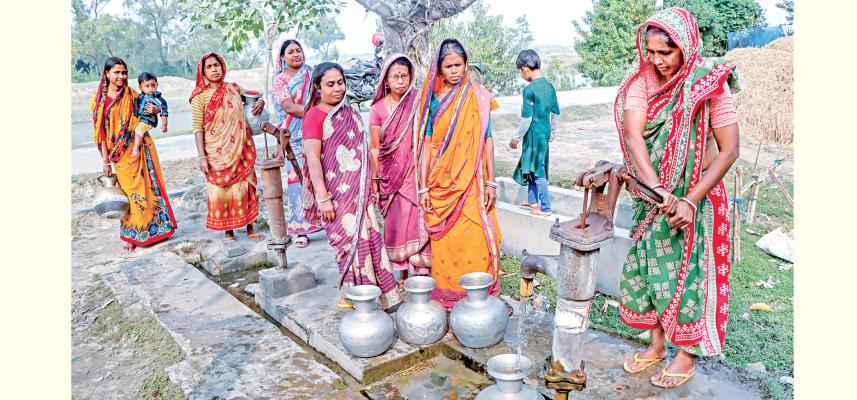
Women, dealing with it everyday.
Like air, soil, and sunlight, water is one of the most essential elements we need to live. It is easy to get and generally affordable. It is often said that when we get something easily, we fail to realise its importance and often misuse it. Recently, I faced a situation that made me realise how important water is in our daily lives and how carefully we should use it.
In our locality, we can get water from the river, which is quite far from my home, from tube-wells, and from the municipal water supply. Although I have a tube-well at home, it contains too much iron, so we do not usually use it. We mostly depend on the municipal water supply because it is more convenient. The water line is connected directly to the kitchen and washroom, which saves both time and effort.
As a result, we usually do not have to worry about water and can use as much as we want.
About fifteen days ago, the machine that supplied water to our locality became damaged, and the water supply stopped. When I first heard that the water supply had stopped, I was not very worried. I thought the problem would be fixed within a day or two. Since we had some water stored in our tank, I believed we could manage until the supply returned. However, as the days passed, the situation became more serious. The water in our tank gradually ran out within three days, and there was still no sign of the problem being solved. Soon, we found ourselves in great trouble.
Most families turned to rivers and tube-wells for water. I was no exception. However, I discovered that my tube-well had developed some problems because it had not been used for a long time. I also found that the water level was very low, and many tube-well users faced difficulties in getting enough water.
At that moment, I began to understand how dependent we had become on the municipal water supply.
The shortage affected every part of our daily life. Every morning, I had to think carefully about how much water we could use. Cooking, cleaning, washing clothes, and bathing all required water. Even a simple cup of tea needed water. Sometimes we postponed washing clothes or cleaning the house frequently because we wanted to save water for more important purposes. It was surprising to see how many daily activities depended on this single resource.
The experience was especially difficult because I had to continue my regular duties as a teacher. After returning home from work, I still had to collect water for my family. Carrying bucket after bucket was exhausting. Some days I felt very tired, but I had no choice. Looking after my family remained my responsibility. And most of the women did the same here. During this time, I realized how fortunate we usually are when water is available simply by turning on a tap.
I also observed the struggles of my neighbours. Many families faced similar problems. Elderly people found it difficult to carry heavy buckets. Most of them went to river for taking a bath or washing purposes. Children often helped their parents collect water. Some people had to walk long distances to find a reliable source.
Despite these hardships, I was touched by the kindness shown by many people. Neighbours shared information about water sources and helped one another whenever possible. The difficult situation brought the community closer together.
Finally, I found a source outside my house from where I could collect water for all household chores, such as drinking, cleaning, washing, cooking, and bathing, depend on water. Every day, I had to bring about 200 litres of water, which meant carrying nearly twenty small buckets. During holidays, this was manageable, but on workdays it became extremely difficult.
This incident taught me several valuable lessons and gave me a chance to correct my mistakes. First, when we have something useful, we should take proper care of it. If I had maintained the tube-well properly, it would not have become unreliable when I needed it most. Second, I realised the true value of water and learned how important it is to use it wisely.
Around the world, millions of people do not have easy access to clean water. Many communities suffer from water shortages every year. Before this experience, I had heard about such problems but never truly understood them. After facing even a temporary shortage myself, I developed a deeper appreciation for the challenges that many women face every day.
Before this incident, we used water as much as we wanted. We often spent two or three buckets of water for bathing when one bucket would have been enough. This experience taught not only me but also my entire family to do our daily tasks using the least amount of water possible.
Since then, my family and I have changed some of our habits. We no longer leave taps running unnecessarily. We try to use only the amount of water that we actually need. We have also started checking our tube-well regularly so that it remains usable during emergencies. Most importantly, I teach my children that water is a precious gift from nature and should never be wasted.
This experience changed my perspective on life. We often realise the value of something only when it is no longer available. Water is a precious gift of nature, and we should never waste it. It is not just something we use every day; it is the foundation of life itself. Therefore, it is our responsibility to use it wisely and encourage others to do the same. By using water carefully and responsibly, we can help conserve this essential resource for ourselves and future generations.
- Environment
- Climate Change
- Earth Emergency
- Global