
What Is Your Grandmother’s mother’s Name?
Jul 31, 2026
story
Seeking
Encouragement


What Is Your Grandmother’s mother’s Name?
As the plane landed in Johannesburg, I opened the South African Airways magazine. In front of me was a column by Hasselblad Award-winning artist Zanele Muholi. One sentence immediately caught my attention:
“South Africa carries many untold stories. Too many people die with their memories unpublished, undocumented, and unarchived.”
I could not have known then that those words would become the lens through which I would experience the next three weeks.
What was your grandmother’s mother’s name?
That was the question that brought me back to my place of birth, Port Elizabeth, now known as Gqeberha.
I spoke with family, friends, community and religious leaders, hoping to uncover the name of my own great-grandmother. The closest I came was learning the name of my grandmother’s eldest sister, Martha Sayster Welcome, who was born in 1934 and passed away in 2003.
But this journey was never only about finding a name.
Over the past three weeks, my travels did not simply take me to beautiful beaches, breathtaking wildlife, or along the magnificent Garden Route. They also took me through the everyday spaces of memory and survival, places like Fairview, Willowdene, and the northern areas. These were not just locations on a map, but living archives of people’s stories, shaped by displacement, resilience, and time. They became a collection of stories especially the stories that were never told, of which I will write in another article.
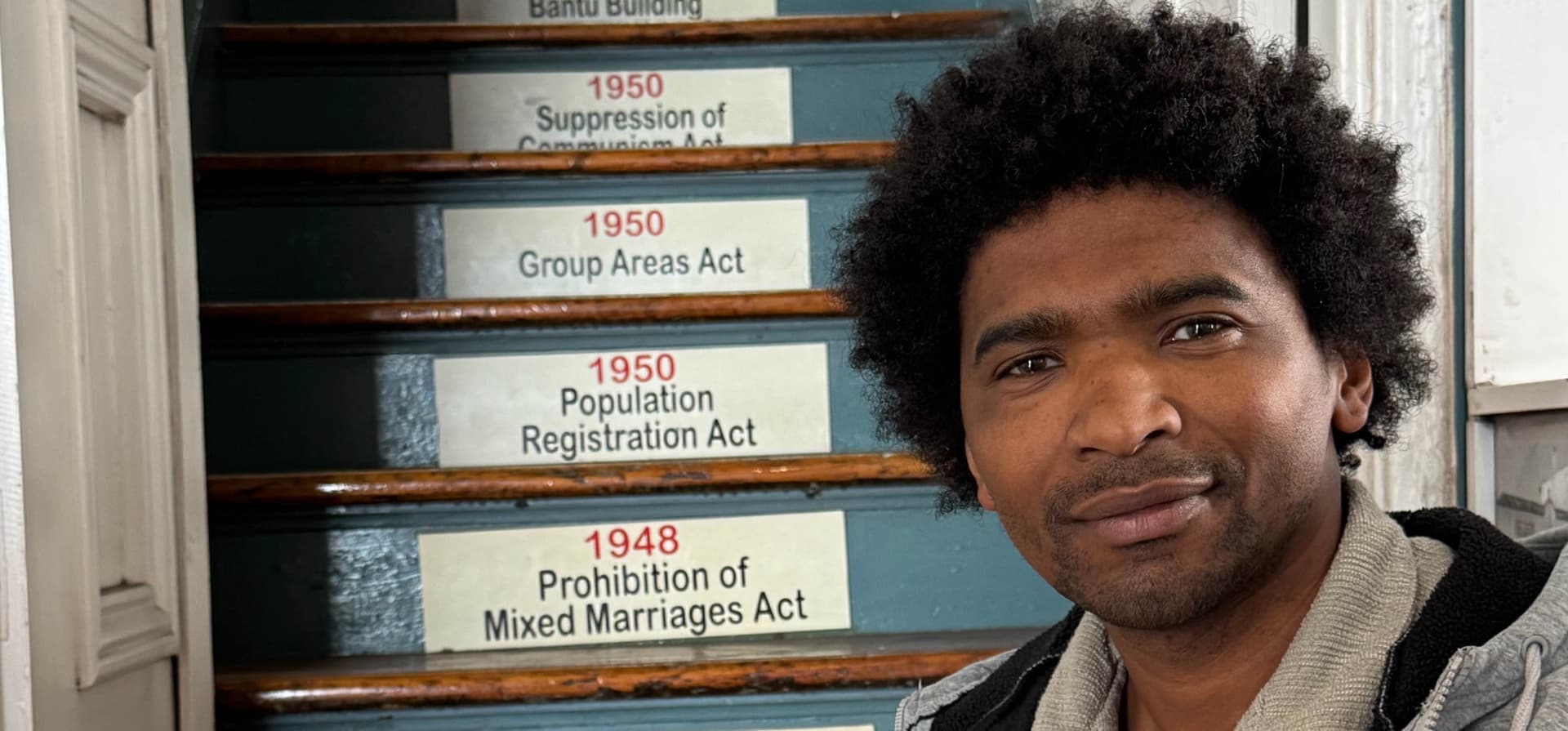
I wanted to understand my own family tree, tracing it back at least four generations. I wanted to learn about the lives of my parents and grandparents, and about the ways government policies and social transitions shaped their lives. Policies such as:
1948 – Prohibition of Mixed Marriages Act
1950 – Group Areas Act
1950 – Forced removals under apartheid legislation
At the South End Museum, I came across words that stayed with me:
“We know where people were relocated, but we have little understanding of what those forced removals did to families.”
That sentence explains so much.
“Most of the stories will remain untold,” an eighty-year-old lady in Arcadia, told me.
“We were never taught to speak. If you asked too many questions or talked back to your parents, you were considered too big for your boots.”
Another simply said, “We were too busy surviving.”
The pain was often too great to share. So many chose to bury their stories with them.
I am deeply grateful to everyone who took the time to speak with me. Thank you to the Michaels, Nelson, Maarman, Kramer, Minnies, Nene, Sayster, Botha, Bruce, Paulsen, Dolley, Plaatjies, Jansen, Slingers, Joseph and Windvogel families for opening your homes, your memories, and your hearts.
A special word of gratitude to my grandmothers, Sophie and Katrina, who were inseparable, and to Ouma Rita and Ouma Pie, whose stories continue to shape my own. May their souls rest in peace.
What have I learned?
- Ask questions and do not give advice.
- Do not judge, because you rarely know another person’s story.
Not everything in the past was painful. If you take the time to look, you will also find stories of love, resilience, laughter, faith, and hope.
Our story did not begin in 1934, and it certainly does not end with us. We may walk different paths, but we know where we come from, and we remain grateful to those who walked before us.
I write because I think.
I think because I feel.
I feel because I see and hear.
And tasting, smelling are all part of the journey.
Randall Maarman; Son of Katie Michaels, Hennyboy Nelson, and Henry Maarman.
- Health
- Education
- Human Rights
- Africa