
WORLD PULSE FEMALE GENITAL MUTILATION CAMPAIGN YEILDS RESULTS IN BORUM, BOKI, CROSS RIVER
Jul 31, 2026
story
Seeking
Collaboration


WORLD PULSE IMPACT ON FEMALE GENITAL MUTILATION YEILDS RESULTS IN BOKI, AS BORUM WOMEN RE-WRITE HISTORY
Some years back my WORLD Pulse sister, Olutosin Oladosu Adebowale connected with me and requested that I led her to the communities across Cross River State, where female genital mutilation was still in practice. I was excited to lead her to Borum community in particular, being that it seemed almost impossible to stop the practice in this place, even as the Catholic Church made it a condition for them to have their son ordained as a Catholic Priest. Although the ordination eventually took place, fear and silence continued for years.
The women were still so afraid to publicly voice out against this ugly traditional practice. Majority of them believed that it was a taboo for a girl not to be circumcised. The only woman who could boldly speak with us was the mother of a one- time local government Chairman of Boki, their locality.
We played our part and left satisfied that, we were, at least, able to create awareness against the practice, having given them, "food for thought.
Today, our joy knows no bound as Borum women rewrote history with pride and gratitude-From female circumcision, to a celebration of culture without the Cut.
For generations, the annual female circumcision ceremony among the Borum people of Boki was regarded as an important cultural rite of passage. It was deeply rooted in tradition, making conversations about its health consequences and the rights of girls and women extremely difficult.
The campaign was not an easy struggle. Resistance was strong, and many women who had experienced the practice were afraid to speak openly about the physical and emotional pain it caused. The silence surrounding the issue made change seem almost impossible.
Non stop campaigns against the practice remained. This encouraged serious reflection within the community about the future of the tradition and the wellbeing of its daughters.
Many women remained hesitant to discuss the subject publicly, while community leaders sought a way to respect their heritage without exposing girls to harm.
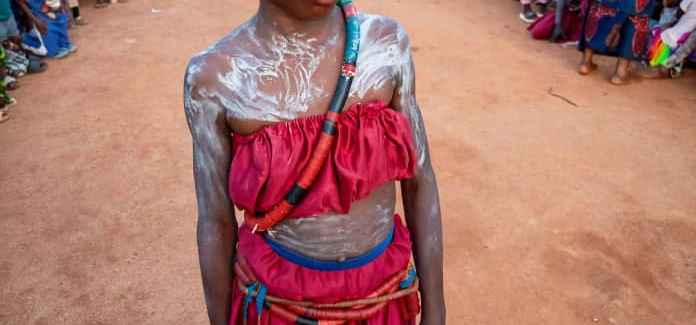
Then, this July, came a remarkable shift. The people agreed to mark the circumcision ceremony but without cuts. They cìelebrated for the first remember, the traditional ceremony without performing female circumcision. Instead of the cut, the event became a remembrance of the community's history and cultural identity. Songs, gatherings, and celebrations continued, but girls were no longer subjected to the harmful practice.
This transition demonstrates that culture is not static. Traditions can evolve while preserving the values of ⁸unity, identity, and community. The Borum example shows that cultural pride and the protection of girls' health and dignity can exist side by side.
The journey was long and, at times, painful. It required courage from community members, faith leaders, health advocates, and women who dared to imagine a different future. Their collective efforts have helped create a new legacy—one that honours the past without repeating practices that can endanger the wellbeing of girls.
Today, the Borum community is demonstrating that culture can evolve without losing its identity. The recent decision to commemorate the traditional ceremony as a cultural remembrance, without performing female circumcision, reflects a growing commitment to preserving heritage while protecting the health, dignity, and rights of girls.
The experience of Borum stands as an important example of how communities can respectfully adapt long-held traditions in response to new knowledge, dialogue, and shared concern for future generations.
A deeper look at the historical background of Female Circumcision Among the Borum People of Boki, revealed that, among the Borum people of Boki Local Government Area in Cross River State, female circumcision was historically practised as part of a traditional rite of passage into womanhood. Like in many African societies, the practice was passed down through generations and was closely associated with cultural identity, family honour, and community acceptance.
According to oral traditions in the community, girls who underwent the ceremony were regarded as having fulfilled an important cultural expectation. The rite was often accompanied by songs, dancing, feasting, and the transmission of cultural values by elderly women. It was seen not merely as a physical act but as a ceremonial transition that prepared young girls for adulthood, marriage, and participation.
I am particularly, happy that World Pulse is also among the Champions that left significant marks in the sands of time as this milestone continue to receive accolades across the globe.
As communities across Nigeria continue to reflect on traditions in the light of health, human dignity, and human rights, Borum offers a hopeful example of positive cultural transformation. It reminds us that abandoning a harmful practice does not mean abandoning culture. Rather, it means allowing culture to grow in ways that protect life, preserve dignity, and inspire future generations.
May this new chapter encourage other communities to celebrate their heritage while ensuring that every girl grows up safe, healthy, and respected.
However, i would be working to ensure that the community is encouraged to sustain this good gesture., though, sustaining change is often more challenging than achieving it. Since the Borum community has already demonstrated that it can celebrate the rite without cutting, the next step I would be engaging is to mobilize the women of this community to work together to make the new tradition the accepted norm across generations.
I will institutionalize the New Rite of Passage developing a community-approved cultural ceremony that celebrates girls without female genital cutting.
Include traditional songs, dances, blessings from elders, gifts, and teachings on womanhood, leadership, health, environment and responsibility.
Encourage village heads, clan leaders, and women's leaders to publicly affirm that the community no longer practices female circumcision.
Their endorsement can reinforce the new norm.
Engage Faith-Based Organizations
Empower Women as Champions
To identify respected women—especially mothers, grandmothers, and former practitioners—who can share their experiences and mentor younger women.
Educate the Younger Generation, using youth leaders themselves, as Influencers.
Introduce age-appropriate discussions in schools, youth fellowships, and community clubs about health, dignity, bodily autonomy, and cultural heritage.
- Health
- Gender-based Violence
- Economic Power
- Sexual and Reproductive Rights
- Africa